What Should a Musician Profile Include Today?
4 August 2026
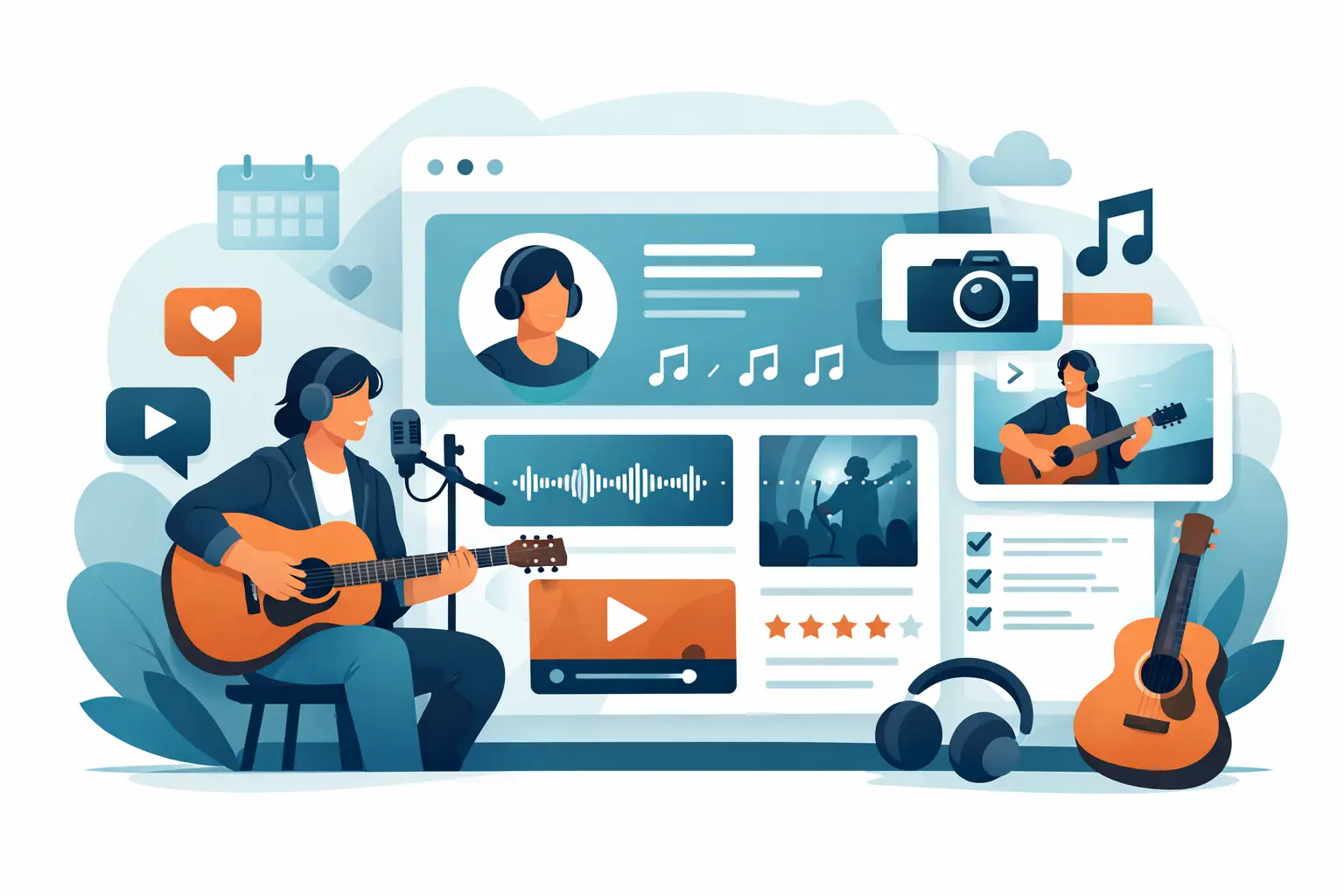
A promoter has five minutes before they move on to the next act. A bandleader needs a dep who can learn the set, show up prepared and fit the room. A fellow musician is looking for someone to start a project with. In each case, your profile has one job: make it easy for the right person to understand what you do and trust you enough to get in touch.
So, what should a musician profile include? Not every credit you have ever collected, and not a wall of vague claims. The strongest profiles combine a clear musical identity with proof that you are active, capable and good to work with in a real local scene.
Start with a clear artist introduction
Your opening should answer the questions people ask before they press play: who are you, what do you play or create, and what are you looking for?
Keep it human and specific. “Singer-songwriter” is a starting point, but “Brighton-based singer-songwriter blending indie folk with soulful pop, available for co-writes and intimate live sets” gives someone a much clearer picture. A drummer might say they specialise in funk, neo-soul and pop, regularly play dep gigs, and are open to original projects. A producer might highlight their genre focus, collaborative style and whether they work remotely or locally.
This is not a press release. Write in the first person if it sounds like you, and avoid trying to appeal to every possible listener or collaborator. A profile with a point of view is easier to remember than one that says it can do anything.
Include the practical basics
Make your name, city or area, main role and relevant musical styles immediately visible. If you are part of a band, make it clear whether the profile represents the group, an individual member or both. People searching for a guitarist in Manchester, a jazz vocalist in Brighton or a keys player for a London function band need to know quickly whether you are a fit.
If you are happy to travel, say so. If you only want original projects, session work or paid bookings, be upfront about that too. Clear boundaries save everyone time and lead to better enquiries.
What should a musician profile include to prove your sound?
A profile needs audio or video that lets people hear and see you doing the work. One excellent live clip is more useful than ten half-finished phone recordings. Choose material that reflects the opportunities you want next.
If you want to join a covers band, show a tight, well-recorded performance of a recognisable song. If you write original music, lead with your strongest released track or a compelling live session. If you are a session musician, a short showreel with distinct styles can demonstrate range without asking someone to scroll through an entire catalogue.
Prioritise quality, but do not wait for perfection. A well-framed rehearsal video with clear sound can show more about your playing, energy and band communication than an overly polished clip that hides your role. Label each piece clearly: song title, your role, venue or project, and the year if it adds useful context.
Keep the selection focused. Three to five clips or tracks is often enough for a first impression. Rotate them as your work develops, especially after a standout gig, new release or better-quality recording.
Show your experience without turning it into a scrapbook
Experience builds confidence because local music work often runs on reliability. Promoters and collaborators want to know whether you have played rooms, worked with others and followed through on commitments.
Add relevant performance history, projects, releases, residencies, festivals, sessions and notable support slots. Emerging artists should not feel they need famous credits to look credible. Regular open mics, community events, student showcases, jam sessions and self-promoted nights all count when they demonstrate that you are participating and progressing.
The key is context. Instead of writing “played loads of gigs”, name a few meaningful examples and explain your contribution. “Lead vocalist for a six-piece soul band performing monthly at local venues” says far more. “Recorded backing vocals for three independent releases” is useful because it tells people what you were hired to do.
For bandleaders and music directors, include relevant practical strengths: reading charts, learning sets quickly, running rehearsals, arranging parts, using in-ear monitoring or bringing appropriate gear. These details can be the difference between an interested message and a confirmed booking.
Credit people properly
Music is collaborative, and a good profile reflects that. Name projects, writers, producers, fellow artists or venues where appropriate. It gives your work credibility while showing that you value the people around you.
Do not inflate a one-off meeting into a long-term collaboration, though. Local scenes are small. Honest credits travel further than impressive-sounding claims that cannot be backed up.
Make your skills and ambitions searchable
Your profile should help people find you for the right reasons. List your instruments, vocal range where relevant, genres, production tools, songwriting skills, technical abilities and performance formats. Think about the words a collaborator would actually search for.
For example, “guitarist” is useful, but “electric and acoustic guitarist, backing vocalist, harmony arranger, comfortable with pop, indie, funk and wedding sets” is far more actionable. A DJ might include genres, event types, equipment familiarity and whether they can provide a sound system. A classical player may need to mention ensemble experience, sight-reading and availability for weddings or recording sessions.
Ambition belongs here too. Say whether you are building a band, looking for regular dep work, seeking co-writers, booking support slots or wanting to meet players for a new live project. Being direct is not needy. It helps the right people recognise an opening to collaborate.
Add recommendations that speak to your reputation
A recommendation is most powerful when it is specific. “Great musician” is kind, but “learned a 25-song function set at short notice, arrived early and kept the dancefloor full” tells a promoter exactly why they should book that person.
Ask for recommendations from people who have seen you work in different settings: bandmates, hosts, musical directors, producers, clients, tutors or venue teams. A couple of genuine comments are enough to create reassurance. Focus on punctuality, preparation, musicality, communication and how you contribute to the room.
This matters particularly for artists without a long list of credits. In local scenes, reputation is built gig by gig. Trusted feedback gives new contacts a sense of what working with you will feel like.
Use photos that match the work you want
Your main image should show your face clearly and feel current. It does not need a major-budget shoot, but it should not be a cropped group photo, a heavily filtered selfie or an image from ten years ago. Use a photo that makes you recognisable when someone meets you at a rehearsal, open mic or venue.
Add one or two performance images if they show your setup, stage presence or project clearly. For solo artists, a strong portrait plus a live image usually does the job. For bands, include an up-to-date group shot with every current member.
Visuals create expectations, so choose them with intention. A moody electronic project, a high-energy wedding band and an acoustic songwriter can all look professional without looking the same.
Keep contact and availability easy to find
A great profile loses value if people cannot take the next step. State the best way to contact you, whether you welcome direct messages, and what enquiries you are open to. If you have upcoming shows, add them. If you are actively looking for musicians, say which roles you need and what level of commitment the project requires.
Update this information regularly. Remove old bands, expired dates and styles you no longer perform. A profile is not a static biography. It is a working tool that should move with your music.
On Groovehub, your Groovecard can bring these essentials together in one place: your skills, showreel, experience, recommendations and the kind of opportunities you want to find. That makes a useful introduction whether someone discovers you through a local event or a direct search.
Build for the person on the other side
The best musician profiles are not the longest or the flashiest. They are the ones that reduce uncertainty. They let a promoter picture you on the bill, let a band imagine you in rehearsal and let a potential collaborator hear where their ideas might meet yours.
Give people a truthful, current view of your sound and your working style, then keep showing up in the scene you want to grow with. Your profile opens the door. The way you play, communicate and contribute is what turns that first click into the next opportunity.