Musician Profile vs Social Media for Better Gigs
27 July 2026
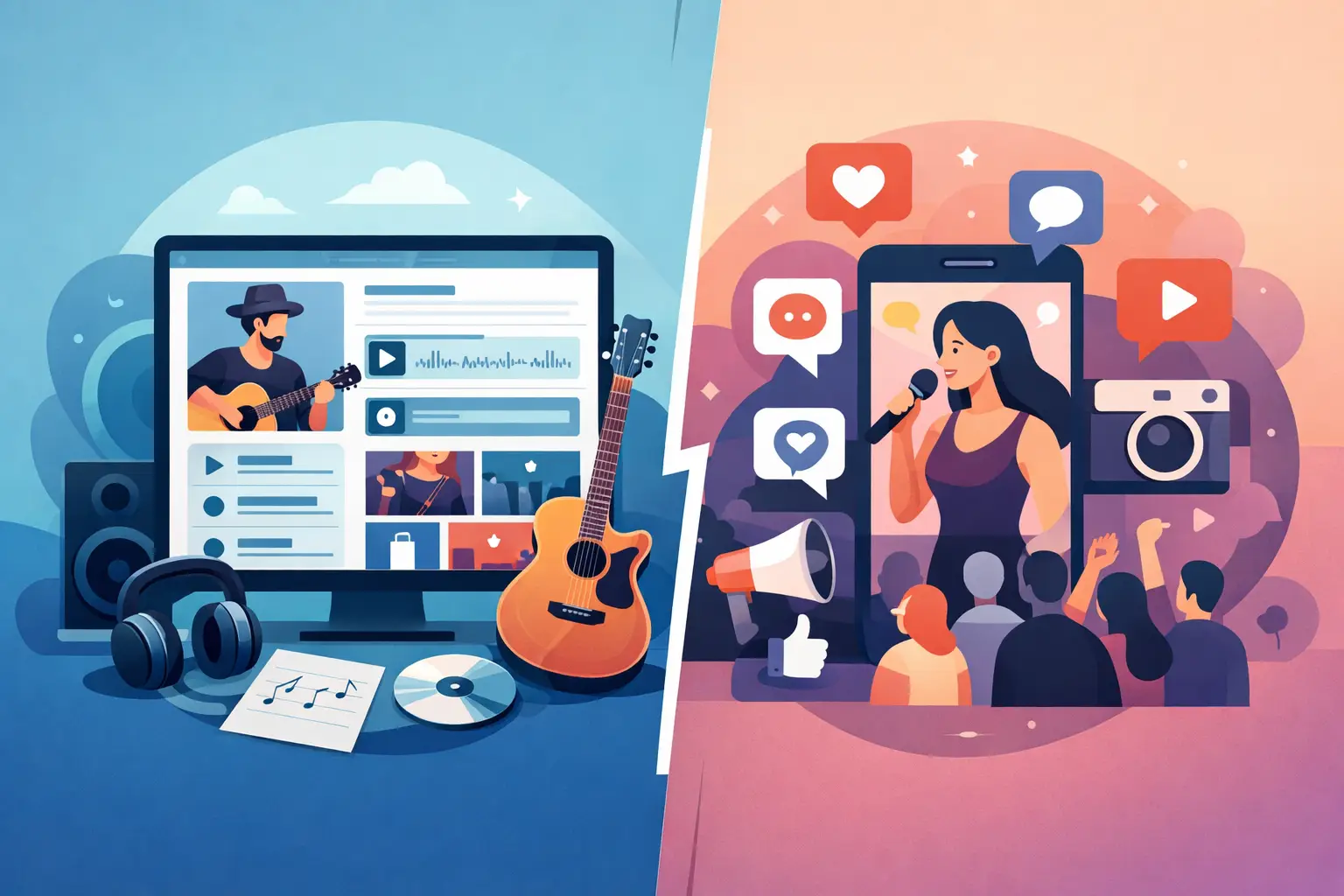
A musician profile vs social media is not really an either-or choice. Your social channels can create a spark, but when a promoter needs a dependable dep, a bandleader is filling a rehearsal slot, or a venue is checking who they are booking, they need more than a good post. They need a clear picture of what you do, where you have played and whether you are the right person for the room.
For musicians building a name in a local scene, that difference matters. One platform helps people notice you. The other helps them trust you enough to make contact.
Social media is built for attention
Instagram, TikTok, Facebook and similar platforms are brilliant at showing movement. A 20-second clip from last night’s jam can capture your sound, personality and stage energy faster than a written biography ever could. A post about a new release can reach people outside your usual circle. Stories and comments make it easy to keep conversations warm between gigs.
That immediacy is social media’s real strength. It lets people follow the journey: the first rehearsal with a new project, the packed open mic, the song idea turning into a finished track. For emerging artists especially, regular posts can make progress visible before there is a long list of credits to show.
But attention is fragile. A post may land with hundreds of people one day and barely reach your existing followers the next. Most people are scrolling quickly, often with the sound off, and they are not necessarily looking to hire a bassist, find a vocalist or programme a support act.
Social media also puts your work alongside everything else: memes, adverts, friends’ holidays and an endless stream of new content. Someone might enjoy your clip, then struggle to find it again when they need a keys player three weeks later.
What social media does well
Use your channels to show your current momentum. Share performance footage, rehearsal moments, upcoming dates and the people you enjoy making music with. Tag collaborators and venues where it makes sense, because local scenes grow through visible connections as much as individual talent.
Think of every post as an invitation, not a full audition. Its job is to make the right person curious enough to learn more.
A musician profile is built for decisions
A dedicated musician profile works differently. It gives a booker, collaborator or music director the useful information in one place: your instruments, genres, experience, performance footage, location, availability and recommendations. Rather than asking someone to piece together your career from six months of posts, you make the case clearly.
This is especially valuable when an opportunity is time-sensitive. A function band may need a guitarist for Saturday. A songwriter may be looking for a producer who understands neo-soul. A promoter may want a local opener with live experience, not simply an impressive follower count. In these moments, searchability and clarity beat algorithmic reach.
A strong profile also lets your reputation travel beyond the room. If you played a great set at a Brighton jam or stepped in at short notice for a New York band, the people there may remember you. A profile gives them a practical way to recommend you to the next person.
That is why a music-focused CV is more than an online bio. It turns informal local credibility into something discoverable. Your showreel proves the sound. Your experience provides context. Recommendations add the detail that a polished video cannot: you arrived prepared, learnt the material, listened to the band and delivered on stage.
Musician profile vs social media: the practical difference
The simplest way to see the difference is to consider intent. On social media, people are usually there to be entertained, catch up or pass time. On a musician profile, they are more likely to be looking for talent, opportunities or credible creative connections.
Neither setting is better in every situation. A singer launching a new single may get far more value from a series of engaging short-form videos. A drummer hoping to join working bands will often get more value from a profile that lists genres, gear familiarity, live clips and recent credits. A band preparing to sell tickets needs social media. A band trying to find a reliable dep needs a better search and referral process.
The trade-off is that profiles need maintenance in a different way. You cannot set one up, add an old demo and expect it to work forever. Keep your best clips current, update your location and instruments, and remove details that no longer reflect the work you want. Your profile should point towards your next opportunity, not only record your past.
Build for the person booking you
When you update your profile, imagine someone has thirty seconds before a rehearsal, a programming meeting or a busy Friday night. Can they answer the basics immediately?
Your headline should say what you actually do. ‘Singer-songwriter and acoustic guitarist’ is more useful than ‘music is life’. Your clips should show the role you want to be hired for. If you want session work, include a clean example of you supporting a song, not only a dramatic solo. If you want wedding and function gigs, make it clear that you know the repertoire and can work a room.
Experience deserves specifics too. Name the kinds of performances you have done, from ticketed shows and theatre pits to regular open mics, festivals and private events. There is no need to inflate a short credit list. Honest detail is more persuasive than vague claims, particularly in local scenes where people often know each other.
Finally, ask for recommendations after a good collaboration, while the details are fresh. A recommendation from a fellow musician, host or organiser can answer the practical questions a stranger has but may not ask directly.
Let the two work together
The strongest approach is to give each channel a distinct job. Put your energy into social posts that feel alive and human, then make sure interested people have somewhere focused to go when they want the full picture. A simple mention of your profile in your bio or a post after a gig can turn a passing view into a useful connection.
Your profile can also shape what you post. If your goal is to find more jazz work, share footage that supports that direction and make your experience easy to verify. If you are starting an originals project, post the creative process while keeping your profile ready for collaborators, venues and press contacts. Consistency between the two builds confidence.
Groovehub is designed around this local-scene reality: a place where your digital artist CV can sit alongside opportunities to discover open mics, jam sessions and people making music nearby. The point is not to replace the energy of social media. It is to give that energy a useful destination.
The local scene advantage
Generic platforms tend to reward scale. Local music careers are often built through relevance. The right ten people in your city can be more valuable than a thousand passive views from elsewhere: the promoter who remembers your set, the songwriter who needs your instrument, the organiser who can recommend you, and the band who calls when their regular player is unavailable.
A well-kept profile helps those connections happen with less friction. It makes your skills easier to find and your track record easier to understand. Social media then keeps the relationship active, showing that you are still playing, writing, collaborating and turning up.
Do not wait until you need a gig urgently to make yourself easy to book. Capture a strong live clip at the next session, add the credit after the next show, and ask one trusted collaborator for a recommendation. Small updates build the kind of presence that makes the next message much more likely to say: ‘Are you free?’