How to Join a Local Jam Circle with Confidence
19 July 2026
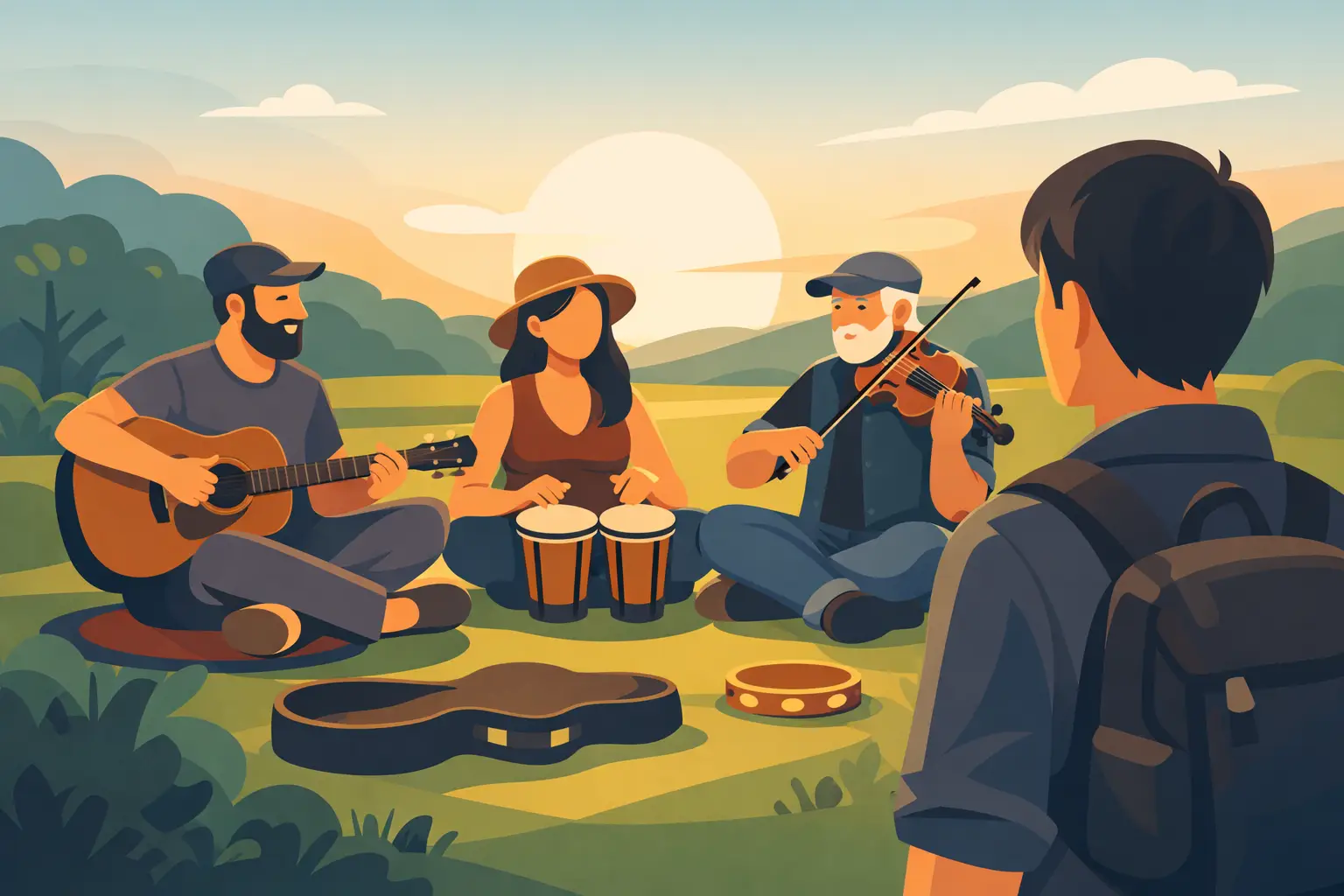
The first time you walk into a jam, the music can feel like it already has its own language. Players trade cues without speaking, songs shift key at speed, and someone always seems to know exactly when to step forward. But learning how to join a local jam circle is not about proving you are the best musician in the room. It is about showing up prepared, listening well and becoming someone other musicians enjoy playing with.
A good jam circle can lead to much more than one enjoyable night. It can introduce you to bandmates, dep musicians, songwriters, promoters and regular gigs. The trick is finding the right room, then making your first few appearances count.
Find a jam circle that matches your level and style
Not every jam is built the same. Some are relaxed acoustic circles in a pub back room, where players take turns sharing original songs. Others are loud, fast-moving jazz, funk, blues or soul sessions with a house band and a sign-up sheet. There are genre-led gatherings for folk, reggae, hip-hop and electronic artists too.
Before you go, get a sense of the session’s format. Check whether it is open to all instruments, whether you need to sign up in advance, how long each slot lasts and whether there is a house rhythm section. A jam advertised as beginner-friendly may be ideal if you are building confidence; a busy late-night funk session may suit you if you are comfortable learning arrangements on the spot. Neither is better. The right choice depends on where you are now and what you want from the room.
Local event listings, venue posts and musician recommendations are useful starting points, but informal details matter too. Ask whether the session is welcoming to new faces, whether singers need to bring charts or keys, and what time people actually arrive. On Groovehub, you can use city-based event discovery to find sessions and see who else is active in your local scene.
Prepare for your first local jam circle
Preparation is not about rehearsing a forty-minute set. It is about making it easy for other people to play with you. Bring your instrument in working order, plus leads, strings, sticks, picks, a tuner and anything else you would regret borrowing at the last minute. If you sing, have two or three songs you can call confidently in keys that suit your voice.
Learn a small set of common forms for the type of jam you are attending. At a blues night, know a 12-bar progression and how to follow a turnaround. At a jazz session, understand basic standards, intros, endings and solo order. At a singer-songwriter circle, prepare one strong original and one cover that does not need a long explanation. You do not need encyclopaedic theory. You need enough musical awareness to stay present when the song changes direction.
It also helps to practise starting and ending a tune. Many awkward moments at jams happen because somebody calls a song but cannot communicate the tempo, key or finish. Try saying it out loud: “This is in A, medium tempo, two verses, then solos, and we will tag the final chorus.” That is clear, calm and gives everyone a chance to help make the song land.
Choose material that invites collaboration
Your best showcase song is not always your best jam song. A complicated original with five tempo shifts may be brilliant, but it can put strangers on the back foot. For a first visit, choose material with a strong groove, a simple structure and enough space for other players to contribute.
This does not mean playing safe forever. It means earning trust first. When the room knows you can hold a form, listen to a drummer and leave space for a solo, they will be far more open to your adventurous ideas later.
Arrive early and read the room
Turn up early enough to introduce yourself to the host before the rush. Tell them your name, what you play and that it is your first time there. Keep it simple. Hosts are usually juggling sound, sign-ups and a room full of people, so confidence without demanding attention goes a long way.
Watch the first few performances before putting yourself forward. Notice how musicians join the stage, how long they play, whether people call songs or follow the host’s lead, and how the audience responds. This is not about copying people. It is about understanding the shared etiquette of that particular room.
If there is a sign-up list, write clearly and add useful details: your instrument, your preferred key if relevant, and perhaps one song choice. If players are selected informally, ask the host when would be a good time to sit in. Do not assume an open jam means you should plug in halfway through a song.
Play for the song, not for the spotlight
The fastest way to feel part of a jam circle is to make the music better for everyone. Start by listening. Lock in with the rhythm section, watch for cues and leave room for vocals or lead instruments. If you are offered a solo, take it with purpose, then hand the space back cleanly.
That can be harder than it sounds, especially when nerves make you want to prove what you can do. But musicians remember the player who supports the groove, adjusts their volume and reacts to the room. Technical ability gets noticed; musical generosity gets invited back.
Be particularly aware of volume. A great guitar tone or powerful vocal can still overwhelm a small stage. Ask for a little less in the monitor if you are unsure, and keep an eye on the sound engineer or host. The aim is not to disappear. It is to create a sound people want to stand inside.
If something goes wrong, keep going
You may miss a cue, forget a lyric, enter in the wrong place or lose track of a chord change. It happens to experienced players too. Recovering well is a more useful skill than pretending mistakes never happen.
Keep listening, simplify your part and find the one again. If you called the tune, give a clear cue and carry on. A relaxed response reassures the rest of the band and prevents one small mistake becoming the whole story of your set.
Build connections after you play
The best conversations often happen offstage. Thank the musicians you played with and be specific if someone did something you enjoyed: a drummer held the groove beautifully, a bassist found a great counterline, a singer made the chorus lift. Genuine musical feedback is memorable because it shows you were paying attention.
Then introduce yourself to one or two people rather than trying to work the whole room. Ask what else they are involved in, whether they play with a band or come to other sessions nearby. You are not trying to collect contacts. You are starting a real local connection.
If the conversation flows, exchange details and follow through within a day or two. Mention the song you played together or ask about the event they told you about. A short, thoughtful message is more useful than a vague “we should jam sometime”. If you have a music-focused profile with clips, credits and the styles you play, make sure it is current before you begin meeting people. It gives new contacts a clearer picture of where you fit.
Become a familiar face without forcing it
One visit tells you whether a jam is fun. A few visits show people that you are part of the scene. Return consistently when a session feels like a fit, support other performers and stay for more than your own turn where you can. Local music communities grow through repeated, low-pressure moments: a chat at the bar, an offered slot, a recommendation for another night.
There is a balance to strike. Go often enough to build familiarity, but do not treat every jam as an audition for a band. Some friendships take time, and some sessions will simply not suit your sound or goals. If the atmosphere is cliquey, the line-up never changes or the room leaves you feeling smaller than when you arrived, try somewhere else. Your city will have more than one musical doorway.
Know what you can bring to the circle
Jam circles need more than flashy players. They need reliable drummers, harmony singers, bassists who learn songs quickly, producers with rehearsal space, photographers, organisers and people who turn up when they say they will. Think about the practical value you bring as well as your performance.
That mindset changes the question from “Will they like me?” to “How can I contribute to this room?” It makes nerves easier to manage and gives people a reason to remember you beyond a single song.
Your first local jam does not need to be flawless to matter. Bring a prepared tune, listen harder than you show off, and leave with one genuine conversation. The next invitation often starts there.