Why a Local Music Platform Changes Your Scene
23 July 2026
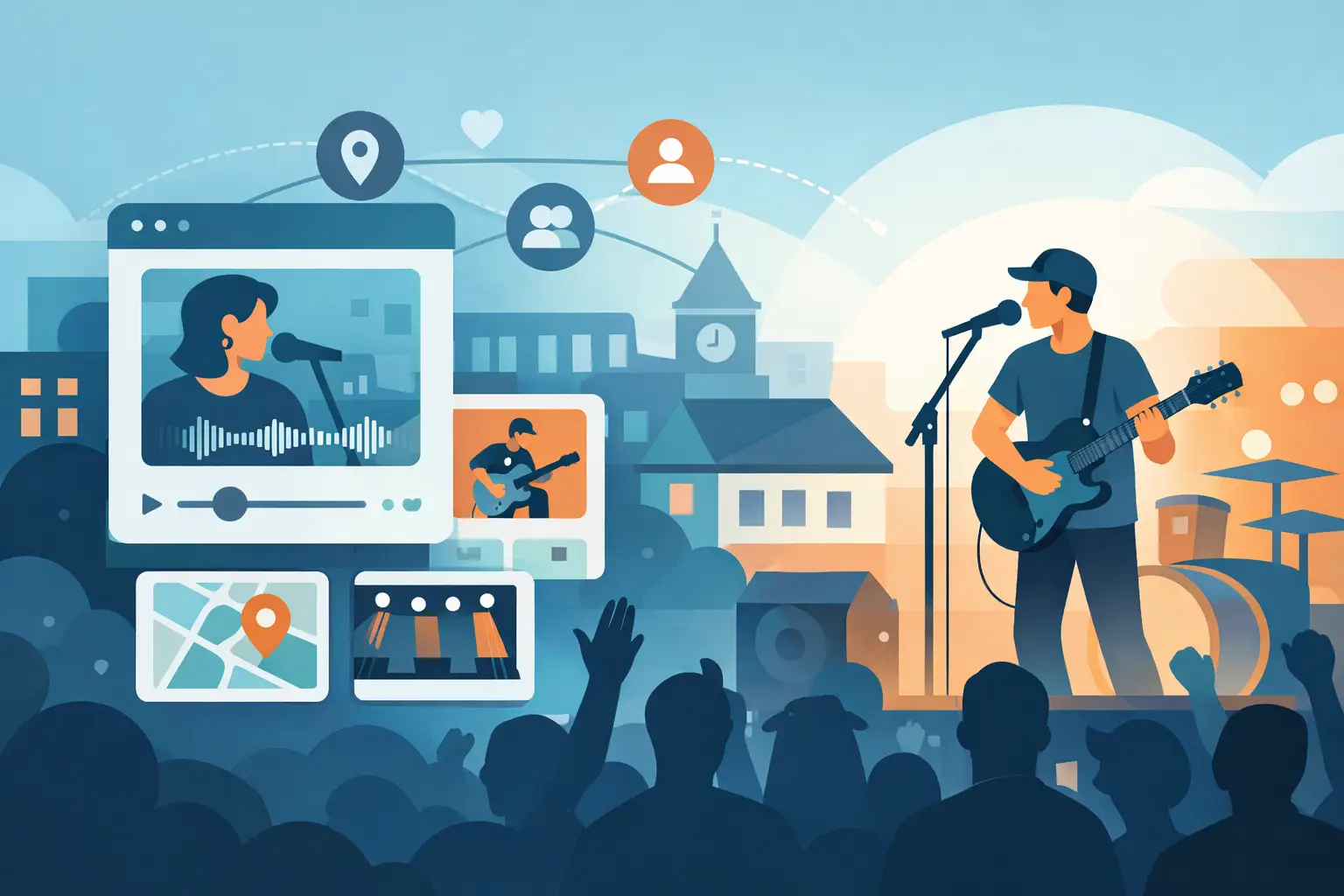
A brilliant Tuesday-night jam can still be almost impossible to find. The details may sit in an Instagram Story, a poster behind a bar, a WhatsApp group you have not been invited to, or in the head of the one person who always seems to know what is happening. A local music platform changes that. It gives musicians a clearer route into the rooms, people and opportunities already shaping their city.
For artists, this is not about adding another app to an already crowded phone. It is about spending less time chasing vague leads and more time playing, meeting collaborators and building a reputation that reflects the work you actually do. For hosts, promoters and music directors, it means reaching engaged local talent rather than shouting into a general social feed.
What a local music platform fixes
Most local scenes are full of opportunity, but the information is fragmented. One venue posts its open mic schedule on social media. Another relies on a mailing list. A brilliant drummer is recommended through friends, while a singer searching for a band may never hear their name. The scene is active, yet difficult to enter unless you already have the right contacts.
That gap affects more than newcomers. Established players can miss a last-minute dep opportunity. Band leaders may struggle to find a keyboard player with the right feel. A promoter might book the same familiar names simply because discovering fresh talent takes too long. When information is scattered, visibility becomes a matter of luck and proximity.
A focused platform gives the scene a shared home. Events can be found by location, date and format. Artists can show what they play, where they have performed and what they are looking for next. Recommendations add context that a polished photo or a short video alone cannot provide. The result is not a replacement for the real-world scene. It is the infrastructure that helps more people take part in it.
Discovery needs more than a social feed
Social media is useful for keeping up with people you already follow. It is less effective when you need an answer to a practical question: Where can I play this week? Which jam welcomes new musicians? Who is running a songwriter night near me? Is there a bassist available for a rehearsal on Thursday?
A local music platform makes those questions easier to answer because discovery is built around participation, not passive scrolling. An event listing can tell you whether you need to sign up in advance, bring your own instrument, pay an entry fee or expect a house band. Those details make the difference between a promising night out and a wasted journey across town.
This matters especially in cities with several overlapping scenes. Jazz musicians, indie bands, soul singers, producers, classical players and electronic artists may share venues, collaborators and audiences without seeing the same posts. Clear listings create useful crossover. A guitarist looking for a funk jam might find a songwriter circle that leads to a new project. A promoter looking for support acts can discover performers outside their usual orbit.
The best discovery tools do not flatten every event into the same generic listing. An open mic, a ticketed showcase and a late-night jam each ask something different of artists. Good information helps people choose the right room, arrive prepared and contribute with confidence.
Your profile should show more than your genre
Local music work runs on trust. People want to know whether you can learn material quickly, turn up on time, listen well and bring the right energy to a session. Those qualities are rarely visible in a standard social profile, and they are difficult to prove through a list of followers.
That is where a music-focused digital CV earns its place. A profile with skills, experience, showreels, recommendations and artistic ambitions gives others a fuller picture. It can show that you are a vocalist who leads a band, a drummer comfortable with charts, a producer looking to co-write, or a sax player available for functions as well as original projects.
The detail matters because local opportunities are specific. A band leader may need someone who can cover harmony vocals. A venue programmer may want an artist who can deliver a 45-minute set. A music director may be searching for a reliable player for a corporate date. Saying you are a "musician" is a start. Showing what you do well, how you work and what others value about you makes it easier for the right people to get in touch.
Groovehub's Groovecard™ is designed around this reality: a public artist CV that lets your local reputation build alongside your event activity. It gives emerging artists a professional way to present themselves without pretending they need a major-label campaign before they deserve to be discovered.
Reputation grows through repeat participation
A healthier local scene is not simply one with more gigs on a calendar. It is one where people return, contribute and recommend each other. When musicians can see where sessions are happening and who is involved, the barrier to showing up drops. When hosts can reach committed participants, events become stronger and more consistent.
That repeat participation creates momentum. You attend a jam, meet a singer, rehearse for their set, get recommended for another project and eventually list your own event. None of those moments needs to be huge on its own. Together, they are how working relationships form.
There is also a fairness benefit. Informal networks will always matter in music, and they should. Trust is built face to face. But a platform can make the starting point less closed. Someone new to a city, returning after time away or moving from bedroom production into live performance should be able to find a way in without needing to know the right person at the right pub.
For organisers, visibility is a responsibility as well as a marketing tool. Listing an event clearly helps people plan their evening, understand the format and feel welcome before they walk through the door. It also gives organisers a better chance of attracting the musicians and listeners who will genuinely suit the night.
How to get real value from your local music platform
Creating an account is only the first move. The artists who get the most from a city-based network treat it as a living part of their music practice.
- Keep your profile specific. Name your instruments, genres, strengths and the kinds of work you want, rather than relying on broad labels.
- Add a short, current showreel. One clear clip that sounds like you is more useful than several unfinished uploads.
- Check events regularly and attend with purpose. Go to meet people, support the room and play when it is the right fit.
- Ask for recommendations after a great rehearsal, gig or collaboration. A genuine note from someone you have worked with carries real weight.
Consistency beats volume. You do not need to attend every open mic in the city or post every rehearsal clip. You do need to make it easy for others to understand what you bring and where they can find you.
What a good local music platform should do
The platform should be free enough to encourage participation, simple enough to use between soundcheck and the last train home, and focused enough to avoid becoming another noisy feed. Searchable artist profiles and practical event information are essential. So are signals of credibility, such as recommendations, experience and clear examples of work.
It should also respect that every city works differently. Some scenes revolve around venues and promoters. Others grow through collectives, community centres, rehearsal spaces, colleges or independent studios. A useful platform creates structure without trying to force every scene into the same shape.
There are trade-offs. No digital tool can guarantee a gig, replace a strong performance or create chemistry between collaborators. A profile only works if it is kept current, and event listings depend on hosts taking the time to add accurate information. Community tools get better when the community contributes.
That is exactly why they matter. A local scene should not feel like a private club with a hidden guest list. Post the event, update your profile, recommend the players who make a room better, and make it easier for the next great collaborator to find their way in.