What Makes a Music Event Listing Platform Work?
3 September 2026
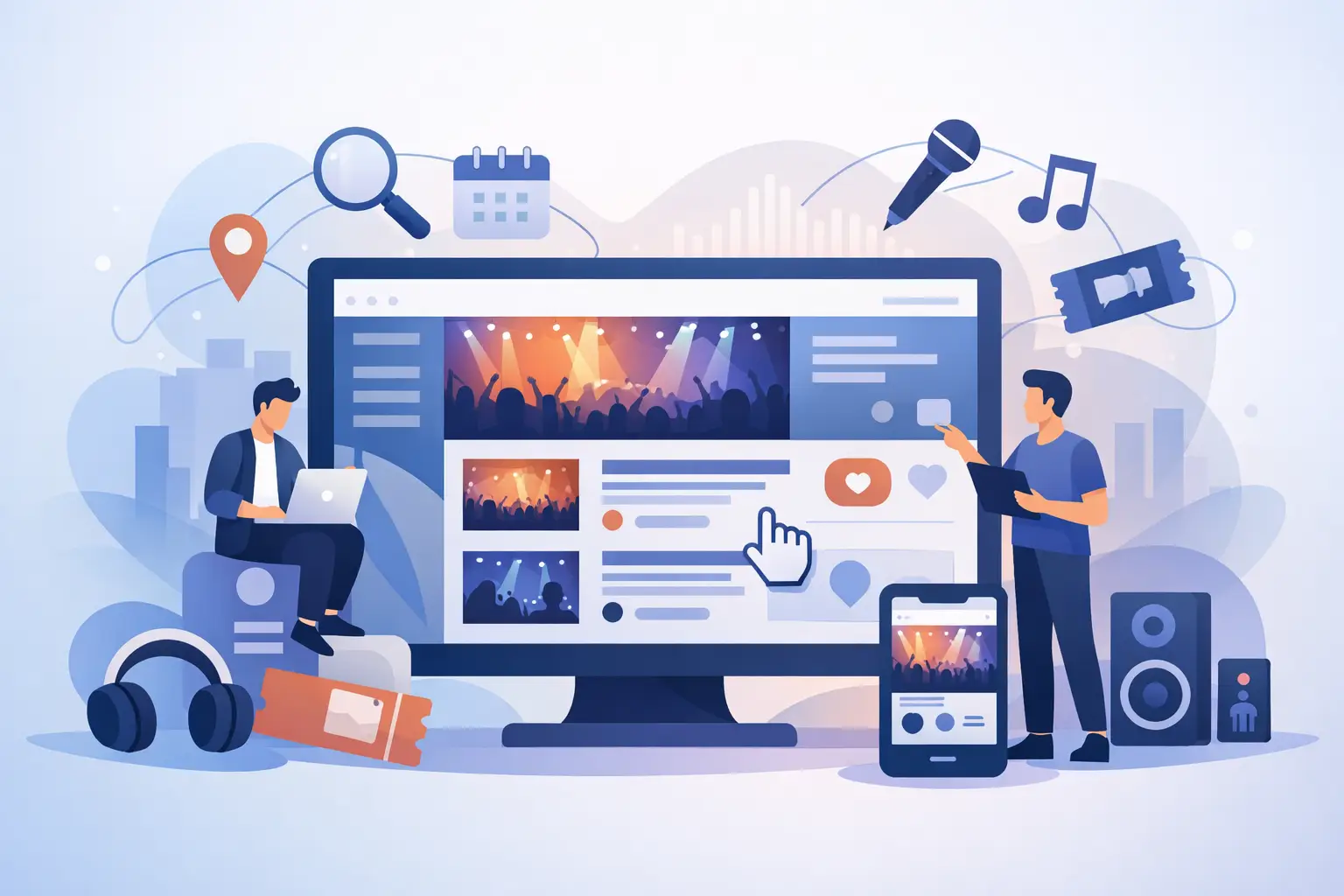
A great music event listing platform does more than tell you what is on this week. It helps you avoid the familiar Friday-night scramble: scrolling three venue pages, two group chats and an Instagram story that disappeared before you caught the set time. For musicians, singers, DJs, producers and hosts, that missing information can mean a missed stage, a missed collaborator or a room full of people who never knew the night was happening.
Local scenes do not lack talent or ambition. They often lack one reliable place where activity can be seen, shared and acted on. The right platform turns scattered opportunities into a living picture of the city’s music community.
Why a music event listing platform matters locally
A local music scene runs on repeat participation. The singer who tries an open mic this month may meet a guitarist, join a rehearsal next week and support a new band’s show later in the season. Those moments look casual from the outside, but they are how careers, friendships and creative projects get moving.
When event information is fragmented, newer artists are usually the first to lose out. Established players may already know which pub hosts the good jam on Tuesdays or who to message for a late slot. Everyone else has to rely on luck, personal contacts or constant social media monitoring. That creates a scene that can feel closed, even when the people in it are genuinely welcoming.
A focused listing platform makes opportunities visible before someone is already in the room. It gives an emerging songwriter the same chance to find a writers’ night that a long-time regular has. It helps a drummer see which sessions suit their style and availability. It gives promoters a clearer route to reach artists who actually want to play.
That accessibility benefits venues too. A well-attended open mic can become a regular fixture. A jam session with a dependable mix of players gains energy. A small ticketed gig has a better chance of reaching people nearby who care about the genre, not just whoever happens to see a post at the right moment.
What musicians need from event discovery
Not every event listing is useful just because it exists. A calendar packed with vague listings can create as much friction as no calendar at all. The details are what allow someone to decide, quickly and confidently, whether an event is worth their journey across town.
Clear information beats hype
Musicians need the practical facts upfront: date, start time, venue, neighbourhood, genre and whether an event is free or ticketed. For participation-led events, the listing should also explain how to get involved. Is sign-up on the night? Are there limited performance slots? Does the host provide a house band, backline or sound engineer? Is the jam open to all levels, or designed for experienced players?
These details set expectations and protect the atmosphere of the event. A first-time performer should not arrive with an acoustic guitar expecting an open sign-up only to learn that places were booked a week ago. Equally, a host can attract better-fit participants by being specific about what the night needs.
Good listings also make the tone of the event visible. A jazz jam, a queer-led songwriter circle, a heavy music showcase and a student open mic may all be welcoming, but they serve different communities. Naming that clearly helps people find rooms where they can contribute comfortably and connect with the right people.
Fresh listings create trust
An event platform only becomes a habit when people trust that its information is current. Nothing drains confidence faster than arriving at a venue to find that the event was cancelled, moved or ended months ago.
That means organisers need an easy way to update their events, while attendees need obvious signals that a listing is active. Recurring nights should be simple to manage, but not assumed to run forever without confirmation. The balance matters: a platform should make it quick to post an event without filling the calendar with stale information.
For users, reliable listings save time. For organisers, they reduce repeated messages asking for the same basics. That is not glamorous, but it is a real improvement to the working rhythm of a local scene.
Events are more useful when people are discoverable too
Finding a jam is only half the job. The bigger value often arrives afterwards, when you meet someone whose playing fits your project and want a practical way to stay in touch.
Generic social profiles rarely tell the full story. A musician might post great clips but leave you guessing about their instruments, live experience, influences, availability or the kind of work they want. A music-focused profile gives context to the connection. It can show performance footage, skills, credits, recommendations and artistic direction in one place.
This matters because local music is built on trust. When a bandleader needs a dep guitarist for a show, they are not only looking for technical ability. They want to know whether the person has played live, understands the style, turns up prepared and is likely to be a good fit. Recommendations and visible experience cannot guarantee that, but they make the first conversation much easier.
That is why Groovehub combines event discovery with a Groovecard, a digital artist CV designed for local scene participation. The event gets people into the same room; the profile helps the connection continue once the instruments are packed away.
What organisers gain from better listings
For an organiser, posting an event is not simply promotion. It is an invitation to shape who turns up. The copy, categories and practical details all influence the crowd, the performers and the reputation a night builds over time.
A clear listing can reduce no-shows and unsuitable enquiries. If a showcase is for original acts, say so. If a jam requires players to know a core set of standards, include that. If an open mic is intentionally beginner-friendly, make that visible. Specificity is not exclusion for its own sake. It helps the right people feel invited.
There is also a discovery advantage. Social platforms favour fast, attention-grabbing posts, but local events often need steady visibility over several days or weeks. A searchable event listing gives a night a longer life. Someone planning their week can find it on Monday, save it and invite a friend on Thursday. That is a different behaviour from catching a post in a crowded feed.
Organisers should still use social channels, posters and direct outreach. A listing platform is not a replacement for every promotional tool. It is the reliable home base where the facts remain easy to find, while other channels create excitement and reach new audiences.
Building a platform that strengthens the scene
The best local platforms do not treat events as isolated pins on a map. They recognise that a listing can lead to a performance, a recommendation, a new band, a regular audience member or a future booking. The goal is not just more listings. It is more useful participation.
That requires a few thoughtful choices. Events should be searchable by city, date, genre and format, because a classical pianist looking for collaborators has different needs from an MC searching for a late-night cypher. Hosts need enough control to describe their event properly. Artists need profiles that reward real experience rather than follower counts alone.
Community reporting and moderation matter as the platform grows. Open access makes it easier for genuine grassroots organisers to join, but it also needs safeguards against misleading listings, spam and events that do not reflect the standards they claim to hold. Trust is built slowly and lost quickly.
There is a trade-off here. Too much gatekeeping can keep new organisers out. Too little can make the platform noisy and unreliable. The answer is not to make every listing feel corporate. It is to make accountability part of the community culture: accurate information, respectful conduct and profiles that represent real people doing real work.
Make the next opportunity easier to find
The strongest music scenes are not defined only by headline venues or established names. They are defined by the places where people get a first chance, return to practise, meet collaborators and become part of something bigger than a single show.
If you play, host, promote or simply show up for local music, keep the useful information moving. Post the event with the details artists need. Share it with the people who would genuinely enjoy it. Turn up when you say you will. A better scene is often built from that small, practical effort - one visible opportunity at a time.