Top Tools for Musician Collaboration in 2026
5 October 2026
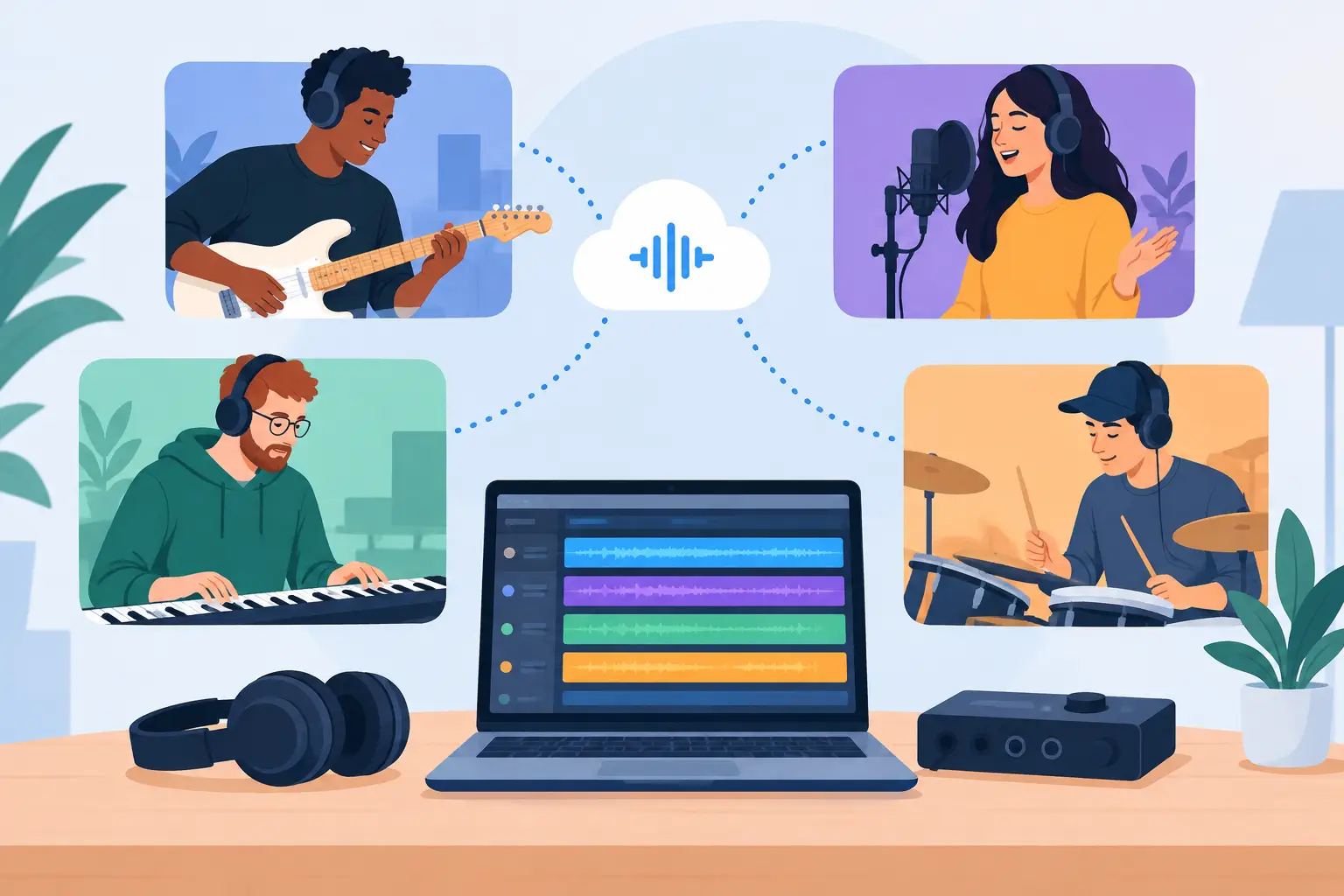
A great bass line in your voice notes is not a collaboration yet. Neither is a promising DM, a half-finished demo, or a band chat that has gone quiet for three weeks. The top tools for musician collaboration help turn those loose connections into rehearsals, recordings, gigs and songs people actually finish.
For musicians building a life in a local scene, the best setup is rarely one app. You need a way to meet the right people, exchange ideas without losing files, organise time together and make sure everyone knows what they are contributing. Here is how to choose tools that support the music rather than becoming another job.
Choose tools around the way you make music
Before downloading another platform, be clear on the kind of collaboration you want. A singer-songwriter looking for a guitarist for a Brighton open mic needs something different from a producer sending stems to a vocalist in another city. A functioning covers band has different pressures again: set lists, availability, keys, arrangements and last-minute venue messages.
The useful question is not, which tool has the longest feature list? It is, where does your current process break down? Maybe you cannot find musicians whose ability and ambition match yours. Maybe everyone records ideas but nobody agrees on a version. Maybe rehearsals get arranged in several chats, then cancelled because the drummer never saw the final message.
Keep your stack small. If your collaborators need three logins before they can hear a demo, they may not use it. Pick tools with a clear role, agree on a simple routine and revisit it when your project grows.
Top tools for musician collaboration start locally
Remote technology is useful, but music scenes are still built in rooms. The person who learns your set at a jam, recommends you for a support slot or introduces you to a dependable keys player can change what is possible for your project.
That is where a local discovery and professional-profile platform earns its place. Groovehub brings open mics, jam sessions and music events into one city-focused space, while helping musicians show more than a social feed. A Groovecard can present your skills, experience, showreel, recommendations and the kind of projects you want to join. It gives potential collaborators useful context before the first message.
Use local platforms with intent. Do not post that you are looking for any musician. Say what you are making, name a couple of reference points, explain whether the project is paid or passion-led, and share the commitment you need. A post seeking a drummer for monthly funk sessions is far more likely to find the right person than a vague call-out for band members.
Showing up matters too. Attend the event, listen before pitching yourself, and follow up while the conversation is still fresh. A digital profile makes discovery easier, but reliability and generosity are what make people want to play with you again.
Build demos together with BandLab or Soundtrap
For writing sessions that happen across bedrooms, studios and busy schedules, browser-based music workspaces can keep the momentum moving. BandLab and Soundtrap both let collaborators record, arrange and comment on projects without everybody owning the same studio setup.
They work especially well for early-stage ideas. A producer can sketch a beat, a singer can add a topline from home, and a guitarist can try parts without waiting for the next rehearsal. Built-in versioning also reduces the classic problem of finding five files labelled final, final 2 and actually final.
There are trade-offs. These platforms are brilliant for accessibility and speed, but they may not suit every serious mix workflow. If you work with large sessions, specialist plug-ins or detailed editing, you may prefer to create in your usual DAW and use a cloud folder for exchange. Treat the online project as the shared sketchbook, then move to a more controlled production process when the arrangement is settled.
Agree on practical basics from the first session: tempo, key, sample rate, song structure and how files will be named. It feels unglamorous, but it protects the energy of the session. Nothing kills a good chorus faster than discovering the vocal was tracked against the wrong version of the instrumental.
Keep stems, notes and decisions in one place
Google Drive, Dropbox and WeTransfer are familiar options for moving audio, artwork and documents. For ongoing projects, Drive or Dropbox is usually more useful because the folder remains available after the first handover. Give every song its own folder, then separate demos, stems, lyrics, artwork and mixes.
A shared workspace such as Notion can add the missing context around the files. Use it for lyric drafts, song credits, production notes, rehearsals and release tasks. It is not there to make your band feel like an office. It is there so the person who missed one rehearsal can catch up without asking the whole group to repeat every decision.
Keep comments specific. Rather than saying the second verse feels off, try: could we leave two bars before the vocal enters at 1:08? Specific feedback is easier to act on and less likely to feel personal. If you are leading the project, make the final decision-maker clear as well. Collaboration thrives on input, but songs stall when every arrangement choice needs unanimous approval.
Use group chats for momentum, not project management
WhatsApp is where many local bands already live. It is fast, familiar and ideal for travel updates, venue changes, set-time reminders and the quick voice note that captures a melody before it disappears. Discord can be a stronger choice for larger collectives, with separate channels for gigs, writing, gear and general chat.
The limitation is searchability. Important information vanishes in an active chat, usually under a run of memes and a discussion about whether someone has left a cable at rehearsal. Put confirmed dates, set lists and key files somewhere more permanent, then use the chat to point people there.
For scheduling, a simple availability poll can save a surprising amount of friction. Doodle-style polls, shared calendars or even a pinned monthly message work well. The best tool is the one every member will actually update. Rehearsal time is expensive, especially when players are balancing gigs, work and travel across a city.
Source sounds carefully and credit people properly
Splice is a popular tool for producers who need samples and quick starting points. It can be productive when you need percussion, textures or inspiration, but it should not become a substitute for your collaborators. A distinctive player can bring more character to a track than another preset ever will.
If you use samples, keep a note of what was used and where it came from. Do the same for every human contribution. Credits should be discussed early, not when a track starts gaining attention. Was the vocalist hired for a performance, or did they write the melody? Did the guitarist create a central hook? Are splits agreed? These conversations are much easier when the project is still exciting and nobody feels overlooked.
A basic split sheet, completed before release, is one of the most collaborative documents you can make. It protects relationships by turning assumptions into a shared record. If money, publishing or ownership is involved, get proper professional advice for your circumstances.
Create a stack that matches your project
A solo artist developing songs with remote producers might use BandLab or Soundtrap for early ideas, Drive for final stems, WhatsApp for quick feedback and a shared document for credits. A gigging band may rely more on a local event platform, a group chat, a shared calendar and a well-organised folder containing charts, backing tracks and set lists.
For a new community project, the order often matters more than the software. Meet people through a jam or open mic. Check their playing and their communication in a low-pressure setting. Exchange a short demo. Book one focused rehearsal. Then decide whether there is enough shared taste, time and trust to build something bigger.
That approach avoids a common trap: spending weeks branding a project with people you have never played with. Chemistry is not only musical. It shows up in punctuality, preparation, feedback and how someone responds when a plan changes on the way to a gig.
Make the system feel human
The strongest collaboration tools do not replace the local music scene. They give it memory, visibility and momentum. They help the brilliant singer at an open mic become findable, the dependable dep become recommended, and the unfinished idea become a rehearsal everyone can prepare for.
Start with one practical move this week: update how you present your musical strengths, attend one event where your kind of players gather, or put your current project files in a folder your collaborators can understand. The right people are easier to find when you make it easy for them to see what you bring to the room.