Press Kits Versus EPKs: What Musicians Need
17 October 2026
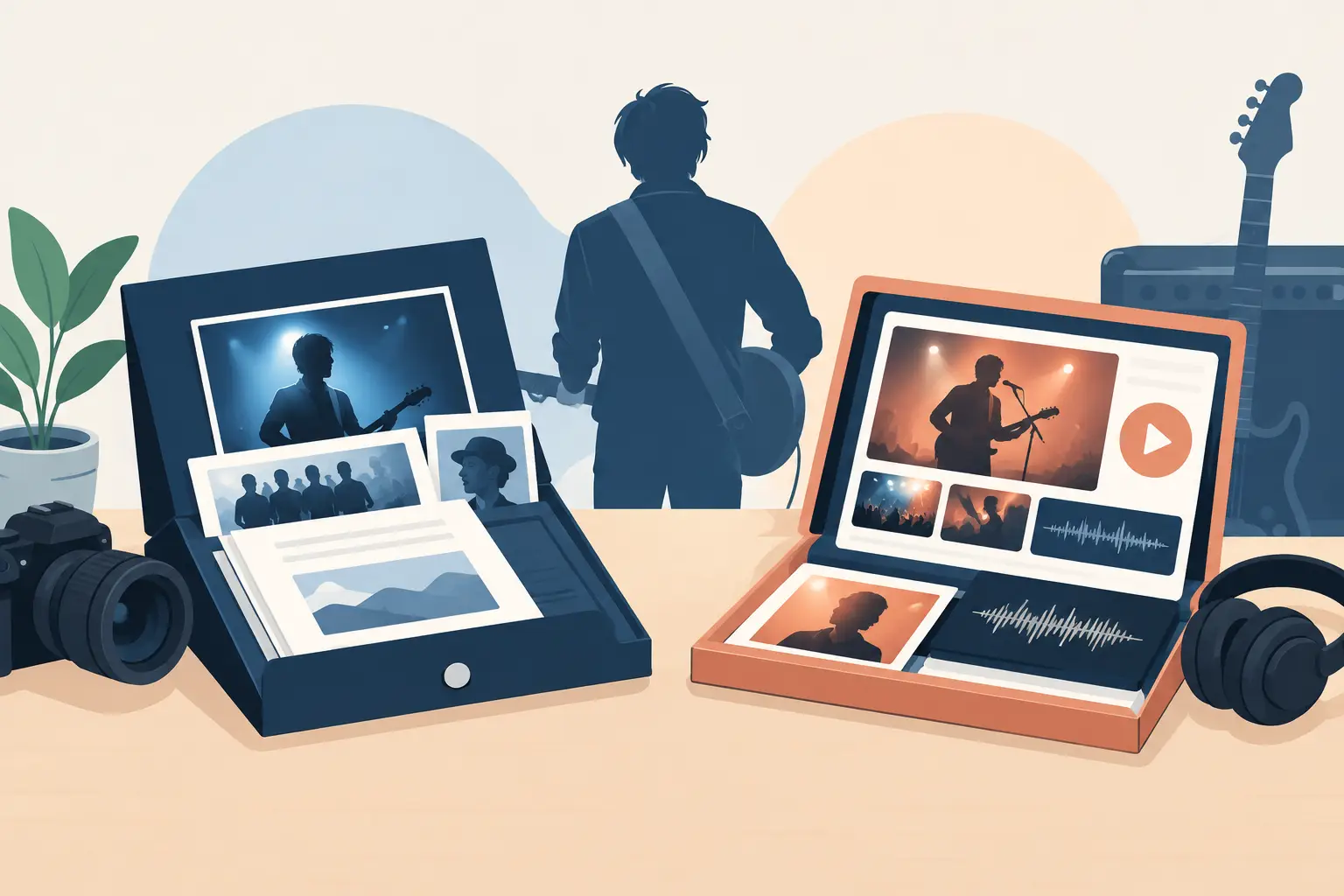
A promoter has replied to your gig enquiry. A local blog wants to feature your next release. A festival programmer asks for more information before adding you to the bill. In all three moments, press kits versus EPKs can sound like a question with two answers. Usually, it is not.
For most independent artists, the terms now overlap. Both are designed to give someone a clear, credible reason to listen, book, feature or work with you without digging through a scattered trail of social posts. The useful distinction is less about file format and more about purpose: who is receiving it, what decision they need to make, and how quickly they need the facts.
Press kits versus EPKs: the practical difference
A press kit is the broad term. It is a collection of approved information and assets that represent an artist, band, event or release. It may be a downloadable folder, a page on a website, a PDF, or a set of materials sent directly to a journalist or promoter.
An EPK means electronic press kit. Historically, this described the digital version of a traditional press pack: a neatly packaged collection of biographies, photos, music, videos, press coverage and contact details. In a music context, many people still use EPK as shorthand for an artist's professional presentation online.
So, are they different? Technically, yes: an EPK is a type of press kit delivered digitally. In everyday gig and release conversations, though, people often mean the same thing. If a venue asks for an EPK, they probably want a fast way to assess your music, live presence and fit for their programme. If a publicist asks for a press kit, they may need approved assets they can use in coverage.
The smartest move is not to correct their terminology. Give them a clean, current package that makes their job easier.
Start with the person making the decision
A strong EPK is not an autobiography. It is a decision-making tool.
A booker needs to know whether your act suits their room, their audience and their budget. They will want to hear the music, see evidence that you can perform live, understand your setup, and find practical contact details. A journalist needs a compelling angle, accurate release information, high-resolution images and a quote or two they can use. A festival team may want both, alongside a concise technical rider or stage requirements.
That means one generic PDF is rarely the perfect answer for every opportunity. Build a core kit, then adjust the order and emphasis. For a release pitch, lead with the release. For a local support slot, lead with your best live video and a short description of your sound. For a music director seeking players, foreground your instrument, credits, showreel and availability.
This approach matters in busy local scenes. A promoter arranging an open mic night, a pub residency or a 300-capacity showcase may receive dozens of messages in a week. Your materials should answer their first questions in under a minute, not ask them to hunt for proof.
What every working artist should include
Your kit does not need to be glossy or overloaded. It needs to be accurate, easy to scan and representative of where you are now. Include these core elements:
- A short biography of around 80 to 150 words that says what you make, where you are based and what makes the project distinctive.
- One longer biography for press use, with relevant story, influences, recent activity and a clear sense of direction.
- Two or three high-quality press photos, including a landscape option, with photographer credit and permission to use them for promotion.
- Your strongest music and live video, labelled clearly so the recipient knows what they are hearing or watching.
- Key facts: genre, location, members, notable shows or support slots, recent releases, social handles, contact details and any relevant technical information.
If you have strong reviews, radio plays, playlist support or notable credits, add a short selection. Do not turn the kit into a trophy cabinet. One credible quote from a respected local publication can help; fifteen tiny logos usually will not.
For bands, clarity around the live lineup is especially useful. State whether you perform as a full band, duo, solo setup or with backing tracks. A booker should not discover on the night that the artist they booked needs six inputs, a drum kit and an extra soundcheck slot.
The assets that earn attention
Music comes first, but context earns confidence. A brilliant studio track can still leave a promoter wondering whether your live set has momentum. A grainy phone clip can show real crowd connection, but it may not communicate your sound properly. Use both evidence and polish where each does its job best.
Your featured track should be the song that represents the show you are trying to book, not necessarily the newest release. If your new single is an intimate piano ballad but your live set is upbeat indie-pop, choose a live clip that sets expectations accurately. Mismatched expectations damage trust faster than a modest follower count ever will.
Photos deserve the same care. Avoid sending a compressed image pulled from a messaging app, a crowded group shot where nobody is identifiable, or a five-year-old photo that no longer reflects the project. You do not need a major-budget shoot. You do need a few usable images with good light, consistent styling and the right permissions.
Where your kit should live
A downloadable PDF can be useful for a one-off pitch, particularly when a festival or funding application requests one. But a PDF becomes out of date quickly and is awkward when it is packed with embedded media. Treat it as a snapshot, not the only home for your professional information.
An online EPK or artist page is usually more flexible. It can hold current links, videos, images, gig highlights and contact information in one place. It is also easier to update after a new release, a better live recording or a run of shows. Keep the page mobile-friendly: many first impressions happen between soundchecks, on public transport, or during a promoter's quick break.
Your public music profile can support this job too. A Groovecard on Groovehub gives local collaborators, hosts and bookers a music-focused view of your skills, experience, showreel and recommendations. It should complement a press kit rather than replace release-specific materials. A profile builds ongoing credibility; an EPK frames the specific opportunity in front of you.
Common mistakes that make good artists look unprepared
The biggest mistake is making the recipient work. Sending a message that says “check us out” with five unrelated links may feel casual, but it creates friction. Give a short introduction, state why you are getting in touch, and send one clear destination for the essentials.
Another common issue is writing a biography that is all mood and no information. “A sonic journey through emotion and atmosphere” does not tell a programmer what genre you play, whether you are local, or why their audience might care. Keep the personality, then add useful facts.
Out-of-date materials are equally damaging. Remove former band members, retired logos, expired release dates and contact details that no longer work. Check every audio link before you send it. A broken link is small, but it suggests your project may be difficult to deal with.
Finally, resist the urge to claim more than you can prove. You do not need to describe yourselves as “the next big thing”. A clear live clip, a well-run local show and genuine recommendations from people in your scene say far more.
Build once, tailor often
Think of your master press kit as your organised source folder. Keep the latest biography versions, approved photos, logos, live clips, release notes, technical details and credits there. From that foundation, make lighter versions for specific asks.
For a venue pitch, send a short note, one live video, one music link and your EPK page. For a press pitch, attach or share the relevant images and lead with the story behind the release. For a collaboration opportunity, put your musical role and examples of your playing at the front.
That is the real value in understanding press kits versus EPKs. The label matters far less than the experience you create for the person receiving it. Make it easy for the right people to hear what you do, see how you show up, and picture you in their next lineup.