Music Platforms That Build Stronger Local Scenes
18 August 2026
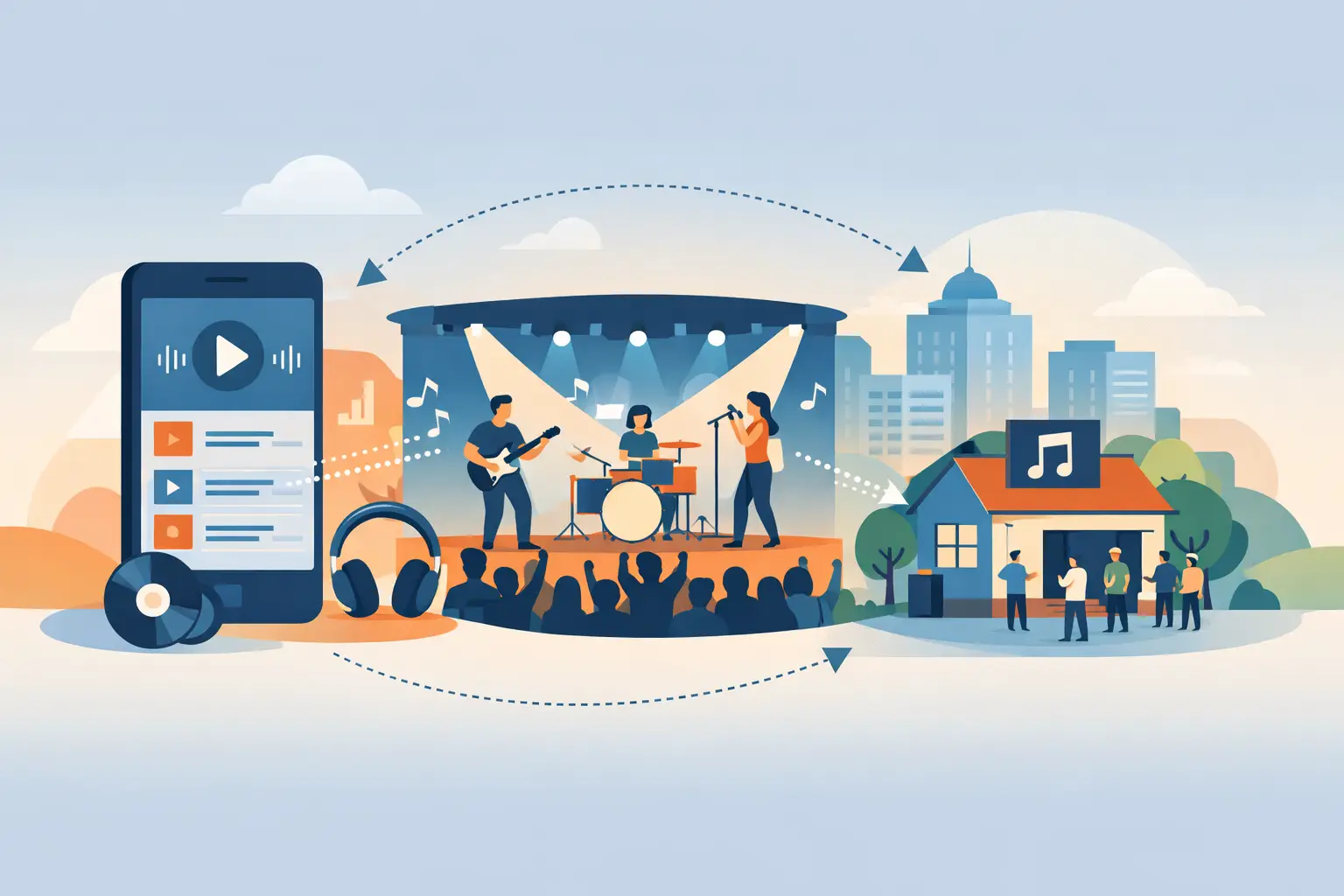
A brilliant drummer can live ten minutes away, a packed open mic can be happening on Thursday, and a promoter may be looking for exactly your sound. Yet most musicians still hear about all three too late - or not at all. That is the gap music platforms should close: not just putting music online, but helping people take part in the scene around them.
For musicians, bands and music creatives, local momentum rarely comes from one viral post. It comes from turning up, meeting the right people, playing consistently and being remembered for the right reasons. A useful platform should make those moments easier to find and easier to build on.
Most music platforms solve only half the problem
Streaming services are built for listeners. Social platforms are built for attention. Ticketing sites are built for transactions. Each can play a role in an artist’s career, but none is designed around the everyday reality of joining a local music community.
A musician looking for a jazz jam in Brighton, a dep gig in New York or a songwriter to co-write with does not need another endless feed. They need relevant information, current opportunities and a way to understand who is active in the scene. They also need a credible way to introduce themselves when an opportunity appears.
That distinction matters. A follower count may suggest reach, but it does not tell a bandleader whether you can learn a set quickly, turn up prepared or hold your own in a live room. A polished clip can show talent, but without context it says little about the projects, venues and people behind it.
Local scenes have always run on relationships. The challenge is that those relationships are often scattered across group chats, venue posts, personal recommendations and conversations after a set. New arrivals can spend months trying to find the rooms where things happen. Established artists can miss collaborators simply because they do not move in the same circles.
What local music platforms need to do
The best local music platforms should reduce friction without flattening the human side of music. They should help artists discover what is on, show what they can do and make it easier for trusted connections to form.
Make opportunities visible when they are still useful
An event listing only helps if it is current, specific and easy to search. Musicians need to know more than a venue name and start time. Is the night an open mic, a jam session, a showcase or a ticketed gig? What genre fits? Is backline provided? Does a performer need to book a slot? Is it welcoming to first-timers, or aimed at players who can follow a fast-moving house band?
These details save wasted journeys and awkward guesswork. They also help organisers attract performers who genuinely fit the event. A singer-songwriter night, for example, benefits from different information than a funk jam or an auditions call for a touring production.
For artists, reliable discovery creates a practical habit: check what is on, choose a room, go play, meet people and return. That rhythm is how a local profile grows.
Give artists a professional home, not just a profile picture
A general social profile is useful for personality and updates. It is not always the best place to present your working musical identity. When someone asks what you play, who you have performed with or whether you have live footage, they should not have to scroll through three years of posts to find out.
A music-focused digital CV gives context to the work. It can bring together skills, instruments, genres, experience, showreels, recommendations and artistic goals in one place. This is particularly valuable for versatile players whose value is hard to capture in a single video - the keys player who can read charts, the vocalist who leads a crowd, or the producer who also performs live.
The aim is not to make every artist look identical. It is to make the right information available when a collaboration, booking or introduction is on the table. A clear profile helps a promoter assess fit quickly. It helps fellow musicians approach you with a better idea. It helps you back up the sentence, “I’d love to get involved,” with something real.
Turn discovery into collaboration
Finding events is only the first step. The real value comes when discovery leads to action: a bass player joins a jam, meets a vocalist, gets called for a rehearsal and later becomes part of a regular project.
A local platform should make active people discoverable by city, skills and musical direction. That does not mean treating artists like interchangeable entries in a database. Good matching still depends on taste, chemistry and shared standards. But it gives those conversations a starting point beyond luck.
For a new musician in town, this can change the experience completely. Rather than waiting to be invited into an existing network, they can see where the scene gathers and present themselves clearly. For busy bandleaders and music directors, it means spending less time asking the same question across several chats: “Does anyone know a reliable drummer for next week?”
Build trust through real scene participation
Music careers are full of informal signals. Did they show up? Were they prepared? Did they support the room? Would people work with them again? These details carry weight, especially in close local communities.
Recommendations and reviews can make that reputation more visible, but they need care. They work best when they are connected to genuine musical relationships and specific experience, not popularity contests. A thoughtful recommendation from an organiser or collaborator often says more than a large audience number.
Trust also grows when a platform reflects participation rather than performance alone. Listing an event, attending a jam, sharing a well-made showreel or recommending a collaborator all contribute to a healthier scene. The result is not just more profiles. It is better information about who is doing the work.
Visibility needs context, not vanity
There is nothing wrong with building an audience online. For some artists, broad reach is essential. But reach and local relevance are different things, and confusing them can lead to frustrating results.
A guitarist with a modest following may be one of the most in-demand players in their city because they are dependable, stylistically fluent and connected to the right rooms. Another artist may have thousands of followers but no practical route into local performance opportunities. Neither measure is the full story.
That is why music platforms built around scene participation can offer something social media cannot: context. They show not only what an artist posts, but how they contribute. They make it easier for people to find a nearby open mic tonight, a collaborator for a new project or an artist whose experience matches a particular booking.
Groovehub is built around this practical connection between event discovery and artist credibility. Instead of asking musicians to choose between finding opportunities and presenting themselves professionally, it brings both into the same local network.
A healthier loop for artists and organisers
When local discovery works, everyone has more to gain. Artists find more places to play and more people to create with. Organisers reach performers who suit their events. Venues can become easier to discover. Audiences benefit from more active, connected nights in their city.
There is a trade-off, though. A platform is only as useful as the community that contributes to it. Event listings need to be updated. Profiles need enough detail to be meaningful. Recommendations need to be honest. This is not a reason to fall back on fragmented channels - it is a reason to treat participation as a shared investment.
The strongest music ecosystems are not built by a single gatekeeper. They grow when artists, hosts, promoters and supporters can all add something useful. Free access matters here too. If the tools are only available to people who can pay to be seen, the scene becomes less representative of the talent actually in it.
Choose a platform by your next move
The right choice depends on what you need right now. If you are releasing a record, a streaming service and social channels remain part of the picture. If you are selling tickets, you need a clear route for audiences to buy. But if your next move is to play more, meet collaborators, fill a bill or establish yourself in a city, look for a platform that is organised around local participation.
Ask practical questions. Can you find events by area and format? Can organisers explain what performers need to know? Can you show your experience without forcing people through a crowded social feed? Can other musicians understand your skills and get in touch with a genuine reason? Does the platform make a new arrival feel able to join in?
The best local scenes are not hidden behind who you already know. They are made visible by people who show up, share opportunities and give the next great collaborator a clear way in. Start with one event, one honest profile and one conversation that could lead somewhere.