Music Event Listing Guide for Local Promoters
11 October 2026
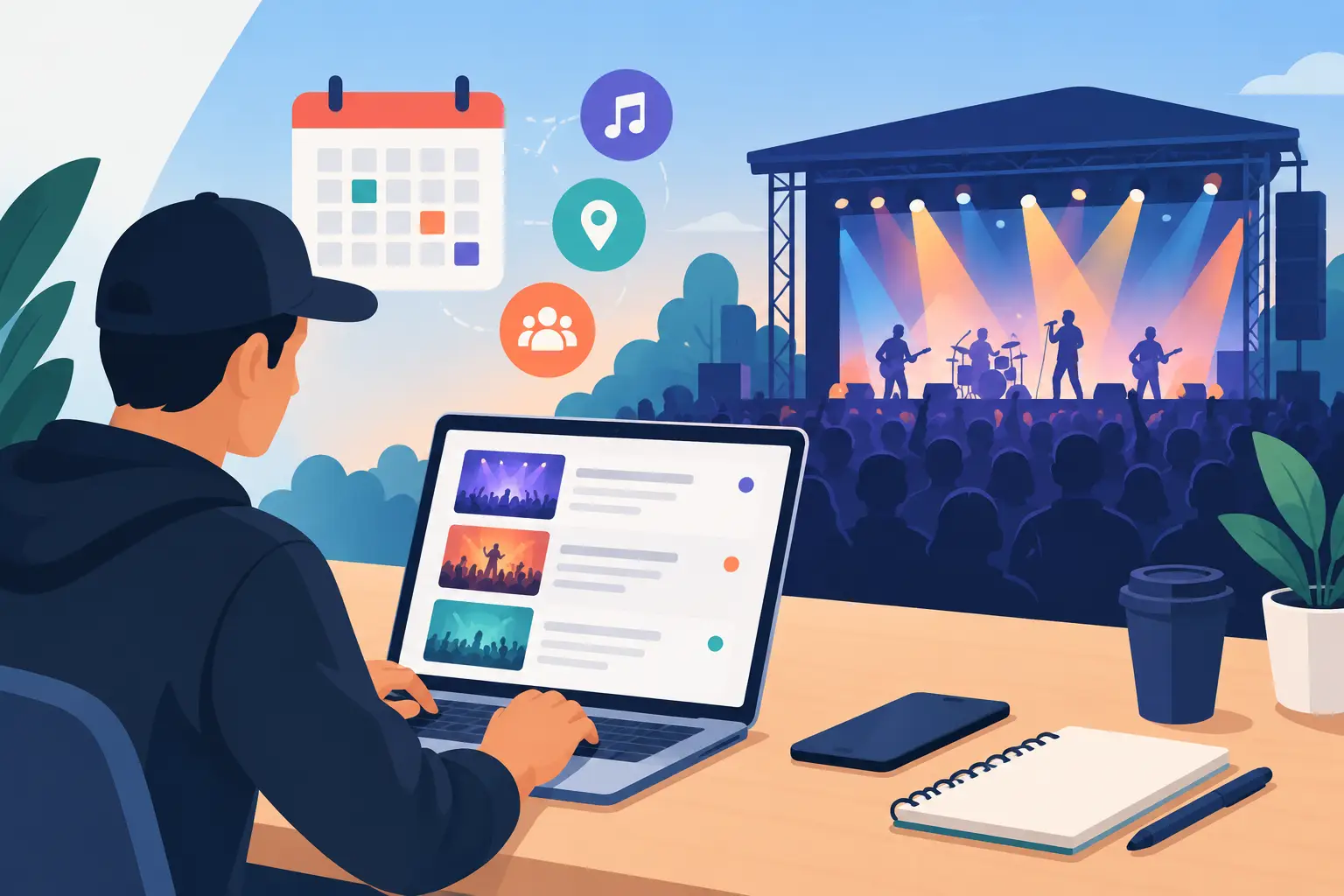
A great night can still play to an empty room if musicians never hear about it. This music event listing guide is for hosts, venues, promoters and artists who want open mics, jam sessions, gigs and showcases to be easy to find - and easy to trust.
A listing is not just a date on a calendar. For someone new to a city, it may be the difference between staying home and meeting their next bandmate. For a working musician, it needs to answer one practical question fast: is this worth travelling across town for?
Why clear music event listings matter
Local music scenes run on momentum. A guitarist hears about a Tuesday jam, turns up, meets a singer, gets called for a dep gig, then brings three more players next week. But that momentum breaks when details sit across disappearing stories, old posters, private group chats and half-updated venue pages.
A useful listing gives people enough confidence to make a plan. They should know what is happening, who it is for, where to go, what it costs and whether they can participate. If they have to message three accounts to find out whether instruments are provided, many will simply move on.
Good information also protects the reputation of the event. Clear expectations reduce no-shows, awkward arrivals and mismatched line-ups. That matters especially for open mics and jams, where the room depends on people feeling welcome enough to take part.
Start with the musician's decision
Before writing, think like the person scanning events at 5pm after work. They are not looking for promotional fluff. They are checking whether they can get there, whether it suits their level and genre, and whether there is a real opportunity to play or connect.
Your event title should make the format obvious. “Thursday Soul and Funk Jam” tells a musician far more than “Live Music Night”. “Acoustic Open Mic for Songwriters” sets a different expectation from “Emerging Artists Showcase”. Keep it specific, but do not cram every detail into the title.
The first two lines of the description should carry the main value. Say what the event is, who should come and what makes it worth their evening. For example: “A relaxed monthly jam for funk, neo-soul and R&B players. Bring your instrument, meet the house band and get on stage.”
That is more useful than calling an event “unmissable”. Let the format, people and atmosphere do the convincing.
What every listing needs
The non-negotiable details
Every listing needs the event name, date, start time, venue name and full location. Add an end time where possible, particularly for late-night sessions or events in venues with several rooms. If doors open before music starts, state both times.
Include the entry price, even when it is free. “Free entry” removes uncertainty. If there is a suggested donation, ticket tier or member discount, say so plainly. Surprises at the door can put off emerging artists who are watching every pound.
Make the event format unmistakable. Is it a ticketed gig, an open mic, a jam, a workshop, a listening session or a networking night? A jam is not automatically an open jam, and an open mic does not always mean a full backing band is available.
Participation details that save messages
For musician-led events, practical participation information is the real headline. Explain whether performers need to sign up in advance, register on arrival or can simply turn up. If there is a sign-up deadline, set length, house band, provided drum kit or shared backline, include it.
Be honest about the musical brief. Mention genres, skill level and the usual set-up. A jazz jam with charts is a different proposition from a beginner-friendly acoustic circle. Neither is better, but people need to know where they will fit.
If the event has limited performer slots, say that too. “Ten open mic slots, first come first served” is clear. “Guaranteed stage time for pre-booked artists” is even clearer. People can make a decision without chasing the organiser for basics.
Venue and access information
A venue pin alone is not always enough. Include the entrance details if the room is upstairs, behind a pub, in a basement or accessed through a side door. In dense city centres, a one-line note can save someone ten minutes of wandering with a guitar case.
Accessibility should be treated as useful event information, not an afterthought. If step-free access, accessible toilets, seating, hearing support or a quiet area are available, note it. If access is limited, be upfront and invite people to contact the host before attending.
Think about transport too. A nearby station, parking reality, bike storage or last-train consideration can be the deciding factor for performers carrying gear. You do not need a travel brochure - one helpful line is enough.
Write for trust, not hype
Musicians can spot vague promotion quickly. Claims such as “the biggest night in town” or “a huge opportunity” do not tell them whether the night is well run. Specificity does.
Name the host, collective, venue or curator. Mention the kind of community the event is building and the musical experience people can expect. If it is the first edition, say so with confidence rather than pretending it has a long history. If it is a recurring session, give a sense of its rhythm: weekly, monthly or every first Sunday.
Photos and short videos can help, but only when they reflect the actual event. Use images of the room, stage, crowd or performers where possible. A polished stock image may look tidy, yet it does nothing to help someone judge the vibe, capacity or set-up.
Trust also comes from keeping details current. If the date changes, the venue moves or sign-ups fill, update the listing immediately. An inaccurate listing does more damage than a simple one.
Build a listing people can scan
Most people will first see your event on a phone between rehearsals, commutes or soundchecks. Structure your copy so the essentials are visible without a long read.
Put the key details near the top, then use short paragraphs for the experience and participation rules. Avoid burying a £12 ticket price or advance sign-up requirement beneath a paragraph about how much you love live music.
A consistent format also helps regulars. When every listing uses the same order - what, when, where, cost, how to join - people learn where to look. That lowers the effort of joining your community and makes your events feel professionally run, even if the team is small.
Promote the listing beyond your own circle
Posting once is not promotion. A good event listing needs to travel through the scene without losing its essential details. Share the same clear information wherever your audience already looks, rather than creating slightly different versions that confuse people.
Ask confirmed performers, house musicians and collaborators to share the listing with a short personal note. Their recommendation can reach the players most likely to attend, and it carries more weight than a generic repost. If the event is designed for a particular community, such as vocalists, drummers or songwriters, lead with that relevance.
Timing depends on the format. A ticketed showcase may need several weeks of notice. A casual weekly jam often benefits from a reminder a few days before, when musicians know their schedule. For a new event, give people enough lead time to trust that it is real and organise their evening.
On Groovehub, a well-built listing can sit alongside the artist profiles and local opportunities that make a scene easier to navigate. That context matters: the event is not a one-off post floating past in a feed, but part of an active network of musicians looking to play, collaborate and show up.
Keep the momentum after the night
The best listings do not end when the first note starts. After the event, update the next date promptly, thank contributors and share a genuine moment from the room where permission allows. This gives newcomers a picture of what they missed and gives regulars a reason to return.
Pay attention to the questions people repeatedly ask. If everyone wants to know whether amps are available, add that detail permanently. If first-timers worry about joining the jam, make the welcome process clearer. Your listing should improve with every event.
A local scene grows when information is reliable enough for people to take a chance on each other. Make the practical details easy, make the invitation feel real, and leave room for the unexpected collaboration that gets people talking long after the final set.