Music Discovery Apps for Your Local Scene
23 September 2026
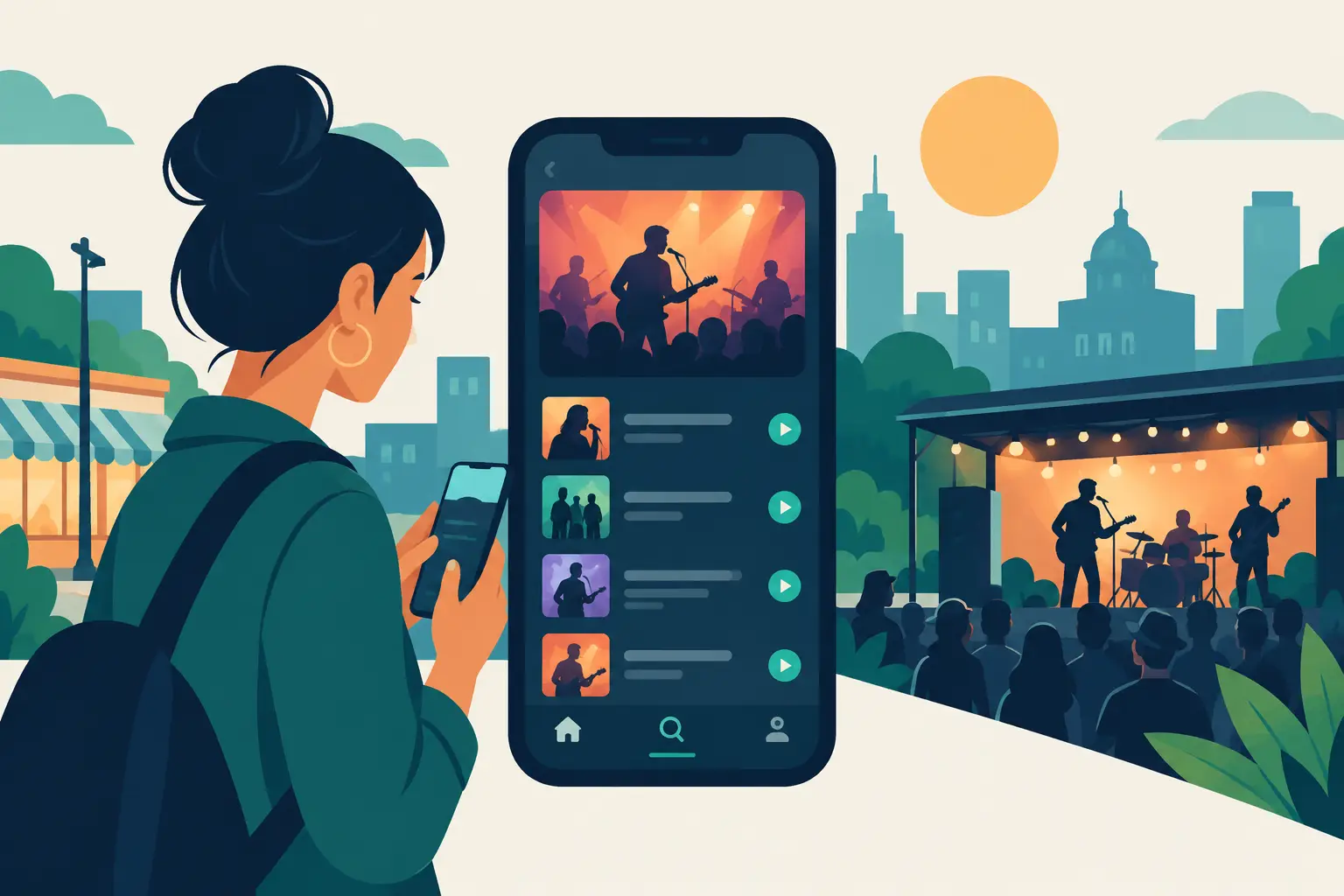
At 6.15pm on a Thursday, a brilliant singer might be warming up for an open mic three streets away while a drummer scrolls past another generic playlist recommendation at home. That gap is exactly where music discovery apps need to do more. Great discovery is not only about finding a new track for your headphones. It is about finding the people, rooms and opportunities that bring a local scene to life.
For musicians, bands and music creatives, the most useful app is rarely the one that knows your listening history best. It is the one that helps you hear about a jam before it is full, find an artist whose sound fits your project, or spot a promoter actively booking your kind of act. Local music moves quickly, and the right information at the right moment can lead to a new collaborator, a first gig or a regular place in the scene.
Music discovery apps should go beyond playlists
Streaming services are excellent at introducing listeners to recordings. If you like neo-soul, post-punk or modern jazz, they can serve up artists with a similar sound within seconds. That has real value, especially when you are researching influences, building a setlist or looking for fresh inspiration.
But listening discovery and scene discovery are different jobs. A recommendation engine can tell you that an artist shares your taste. It cannot always tell you whether they are based nearby, looking for a dep guitarist, playing a showcase next week or open to collaborating. It also cannot show the character of a local event: whether the room is supportive for a first-time performer, whether players actually meet one another, or whether the host welcomes original material.
Local music scenes still run on a messy mix of group chats, flyers, social posts, venue calendars and personal introductions. There is charm in that, but it can also keep opportunities hidden. Newcomers miss out because they do not know where to look. Experienced players can find themselves relying on the same contacts for years. Promoters may struggle to find trusted local artists beyond their immediate circle.
The strongest music discovery tools add structure without draining the humanity out of the scene. They make it easier to see what is happening, who is involved and how to take part.
What makes local music discovery genuinely useful
A useful local discovery app starts with place. A city-wide view matters, but neighbourhood detail matters too. Someone in Brighton may be happy to cross town for a great session, while a London musician might need to know whether a midweek event is realistic after work and travel. Event listings should help people quickly understand the date, venue, genre, format and expected level of participation.
Context is equally important. An open mic and a jam session may both be labelled as live music, but they ask very different things from an artist. One may offer a five-minute slot with a backing track, while the other may be built around improvisation and a shared house band. Clear information helps performers turn up prepared rather than guessing at the door.
People are the other half of discovery. Searchable artist profiles can make finding collaborators far more practical than posting a vague request on social media. A vocalist looking for a producer does not just need a genre tag. They may want to see recordings, previous projects, live experience, recommendations and the kind of work that person wants to make next.
That is why credibility needs to be visible, but not exclusive. A strong profile should give a working musician a place to show what they do, while leaving room for emerging artists who are still building their first credits. Recommendations from real collaborators, showreels and specific skills offer more useful signals than follower counts alone.
Choose music discovery apps for the job at hand
There is no single app that will do every part of your musical life. Streaming platforms are best for broad listening and reference points. Social platforms can help you follow artists, venues and promoters, but their feeds are easy to miss and hard to search. General event listings are useful for audience-facing shows, though they may not tell you whether an event welcomes performers or collaborators.
A local music community platform fills a more specific role. It should help you discover opportunities to participate, not merely events to attend. That might mean finding a writers' circle, an open mic with sign-up details, a jam session suited to your instrument, or a band member with the right experience.
When deciding which tools deserve space on your phone, ask a few practical questions. Can you filter opportunities by location and format? Are event details current enough to rely on? Can you see who is involved before you reach out? Does the platform help you present your own work professionally? Most importantly, is there an active local community using it?
An app with every imaginable feature is not automatically the best option. If no one in your area posts events or updates their profile, it will not create momentum by itself. Local density is what turns a database into a scene resource. The best approach is often to use a small mix of tools while putting your energy into the places where people are genuinely active.
Turn discovery into real participation
Finding an event is only the first move. The musicians who get the most from local discovery tools are usually the ones who follow through consistently. Go to a session even if you are not performing that night. Watch how the room works, introduce yourself to the host and stay for another set. The next visit will feel far less intimidating.
If you are attending an open mic, check the format before preparing your song. Some rooms provide a keyboard, drum kit or house band, while others are strictly acoustic. If you want to meet collaborators, be specific about what you are looking for. “Looking to connect” is friendly but vague. “Singer-songwriter looking for a keyboard player for monthly indie-pop gigs” gives the right people a reason to respond.
Showing up reliably builds trust faster than trying to be everywhere. A regular jam can become a place where people learn your musical instincts. A recurring open mic can lead to recommendations because hosts and fellow artists have seen you perform. Those small, repeated interactions are often where local careers begin to take shape.
There is a trade-off, of course. Going to events takes time, travel money and energy, and not every night will lead to a useful connection. Treat discovery as a long game rather than a transaction. One quiet Tuesday can still teach you which rooms suit your sound, which organisers communicate well and where you would like to contribute next.
Make your profile work before you need it
When someone hears you at a session or sees your name on an event listing, they may look you up later. Your profile should make that next step easy. Include the essentials: your instrument or role, genres, location, current projects and a short description of what you want to do. Then add evidence of your work, such as a strong live clip, studio recording, past performance details or a recommendation from someone you have worked with.
Keep it current. An old bio that says you are “forming a band” can create confusion if you are now actively gigging, writing for other artists or available for dep work. You do not need to make your profile sound grand. Clear, accurate and enthusiastic goes further than inflated claims.
Groovehub brings this local event discovery and professional visibility together through city-based listings and the Groovecard, giving musicians a practical way to show their experience while finding people and places to play. The value is not simply being seen. It is being understood well enough for the right opportunity to find you.
Help the scene become easier to find
Discovery improves when everyone contributes a little. If you know about a welcoming jam, tell people. If you host an event, share enough detail that a new performer can attend with confidence. If someone is great to work with, leave a thoughtful recommendation. These actions make a local scene less dependent on insider knowledge.
The next useful music discovery app will not replace the magic of walking into a room and hearing a brilliant player for the first time. It will make that room easier to find, and make it easier for the right people to walk through the door.