Music Community Trends Reshaping Local Scenes
15 October 2026
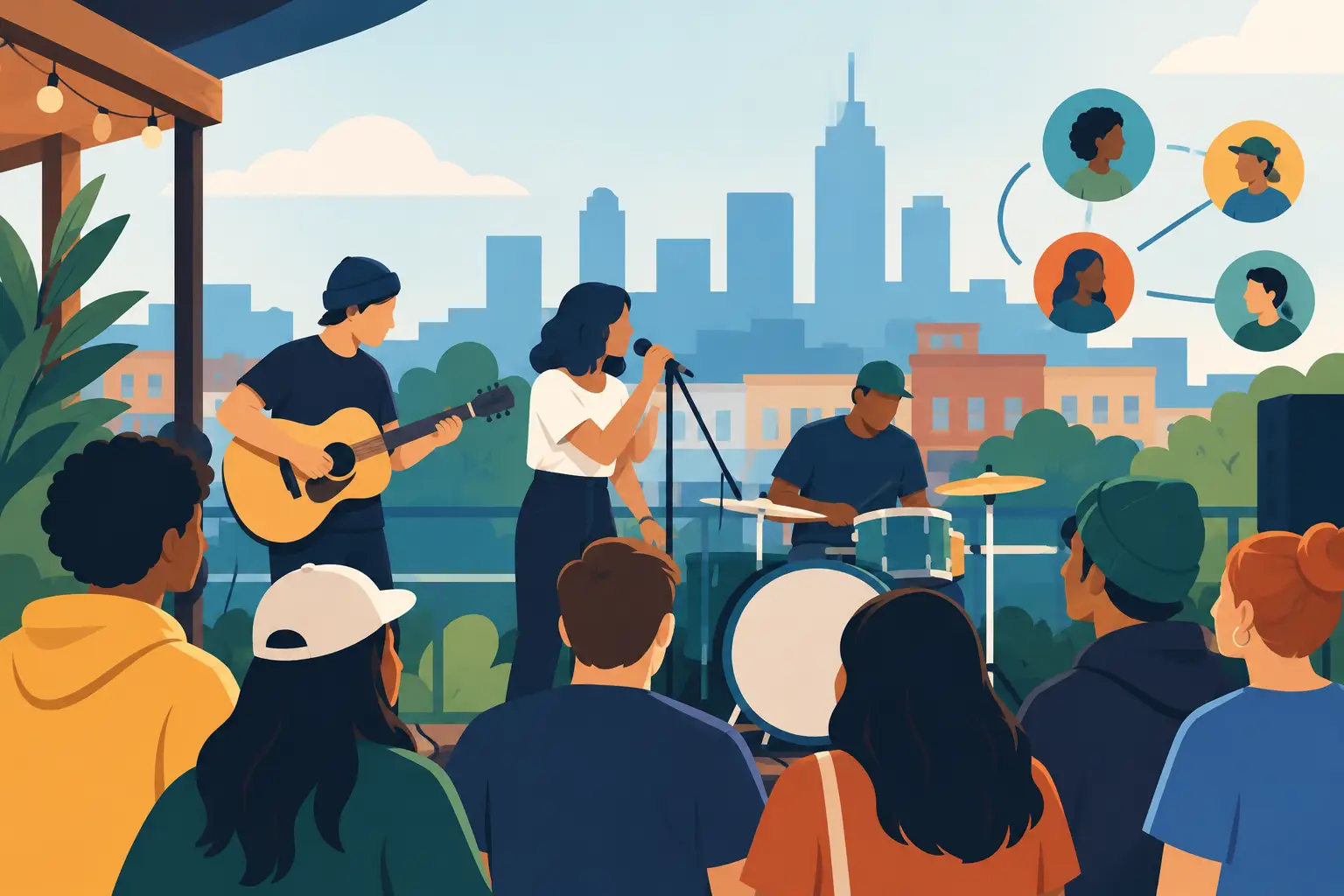
A great local scene is not built by an algorithm deciding who should hear whom. It is built when a singer finds a late-night jam, a drummer gets recommended for a dep gig, a promoter can book reliable support, and a new songwriter feels welcome enough to return next week. The biggest music community trends are making those moments easier to find, share and build on.
For working musicians, this matters because opportunity is still local before it becomes anything else. A strong online presence can help, but it rarely replaces being known in the rooms where people rehearse, perform, collaborate and talk after the set. The shift is towards tools and habits that make local participation more visible, more trusted and less dependent on being in the right group chat.
Music community trends are becoming more local, not less
For years, music platforms pushed the idea that reach was everything. Reach still matters, especially for releases and audience growth, but musicians are increasingly looking for something more useful: a real connection to the people and places around them.
That means city-based discovery is becoming more valuable. An open mic is not just a listing. It can be where a keyboard player meets a bandleader, where an events host hears a future support act, or where a producer finds a vocalist whose voice suits a project. Local scenes create repeat encounters, and repeat encounters create trust.
The practical challenge has always been fragmentation. One event appears on a venue's social post, another lives in a story that disappears by morning, and a regular jam is known only by the people who already go. Musicians lose time searching. Hosts lose potential performers. Newcomers can feel as though every door is already closed.
The growing preference is for clearer, searchable local information. People want to know what is on this week, what genre or level a session suits, who is involved and how to take part. This does not remove the spontaneity that makes a scene exciting. It simply gives more people a fair chance to show up.
Reputation is moving beyond follower counts
A large follower count can signal audience reach, but it does not always answer the questions that matter when someone needs a bassist for a Friday set or a singer for a writing session. Can they learn material quickly? Are they easy to work with? Have they performed in similar settings? Do other musicians rate them?
One of the most useful music community trends is the rise of practical, peer-led credibility. Artists are building profiles that show what they actually do: instruments, genres, live clips, previous projects, performance experience and recommendations from people who have shared a stage or studio with them.
This is especially helpful for early-career musicians. You may not have a long list of headline shows, but you might have a strong showreel, a reliable rehearsal record and good feedback from collaborators. Those signals can open doors that a polished social feed alone cannot.
There is a trade-off. Recommendations need context. A glowing comment from a close friend is not the same as feedback from a promoter, musical director or fellow performer who has worked with you under pressure. The strongest community platforms make room for both human warmth and useful detail, rather than turning reputation into another popularity contest.
Your profile should answer a booking question
Think of your artist profile as a working introduction, not a trophy cabinet. A bandleader or promoter should be able to understand your musical identity in a minute: what you play, what you are looking for, what you have done and what you sound like.
Keep it current. Add a short, good-quality live video. Be specific about availability if you are open to deps, function work or collaborations. Mention your city and the styles you genuinely enjoy playing. A clear profile makes it easier for the right people to say yes and easier for everyone else to avoid wasting your time.
Events are becoming collaboration engines
Open mics, jam sessions and small local gigs are often treated as stepping stones to something bigger. That misses their real value. They are working spaces where musicians test songs, build confidence, meet future collaborators and learn what a local audience responds to.
The best event hosts are responding to this by making participation clearer. They explain whether players need to sign up, bring charts, contact the organiser beforehand or simply arrive early. They set expectations around genre, equipment, house bands and stage time. This helps regulars feel respected and helps new artists feel less intimidated.
For artists, the opportunity is to choose events with intention. A packed open mic may be ideal for testing a new song and meeting other writers. A genre-focused jam could be better for finding musicians who understand your musical language. A small showcase might offer fewer connections on the night but more direct access to promoters and bookers.
Showing up once is useful. Showing up consistently is where momentum begins. Familiarity makes collaboration feel lower-risk. People remember the musician who arrives prepared, listens well, supports other acts and follows through when a conversation turns into a plan.
Smaller, more intentional networks are gaining ground
Not every musician wants to broadcast every rehearsal, demo or career move to a huge audience. There is growing value in focused networks built around a city, genre, instrument or shared goal.
These smaller spaces can be more productive because the context is already there. A request for a percussionist in Brighton means something different from a general post seen by thousands of people around the world. A recommendation from someone active in your scene carries more weight because there is a real chance you will meet the same people again.
That said, local does not have to mean closed. Healthy scenes welcome newcomers, visiting artists and people crossing between genres. The goal is not to create a clique. It is to make participation easier without losing the relationships that give a scene its character.
Groovehub reflects this direction by bringing local event discovery and musician credibility into the same place. When people can see what is happening nearby and understand who they may be working with, the distance between finding an opportunity and taking part gets much smaller.
The next advantage is being useful to your scene
The musicians who become central to a local community are not always the loudest online or the most technically flashy. Often, they are the people who contribute. They share a worthwhile event, recommend a good player, introduce two artists who should meet, or help a new performer feel at home at a session.
This is not about networking in a forced way. It is about recognising that scenes grow through generosity as much as talent. If every interaction is treated as a transaction, people notice. If you consistently bring value, your name becomes associated with trust, energy and possibility.
Start small this month. Attend one event you have not tried before. Update the profile or materials you would send to a collaborator. Recommend someone whose work deserves more eyes on it. Then make the follow-up real: send the message, suggest the rehearsal, share the date.
Local music scenes do not need more noise. They need more clear invitations, better information and people willing to turn a good conversation into the next rehearsal, set or song.