How to Meet Local Songwriters and Start Writing
29 October 2026
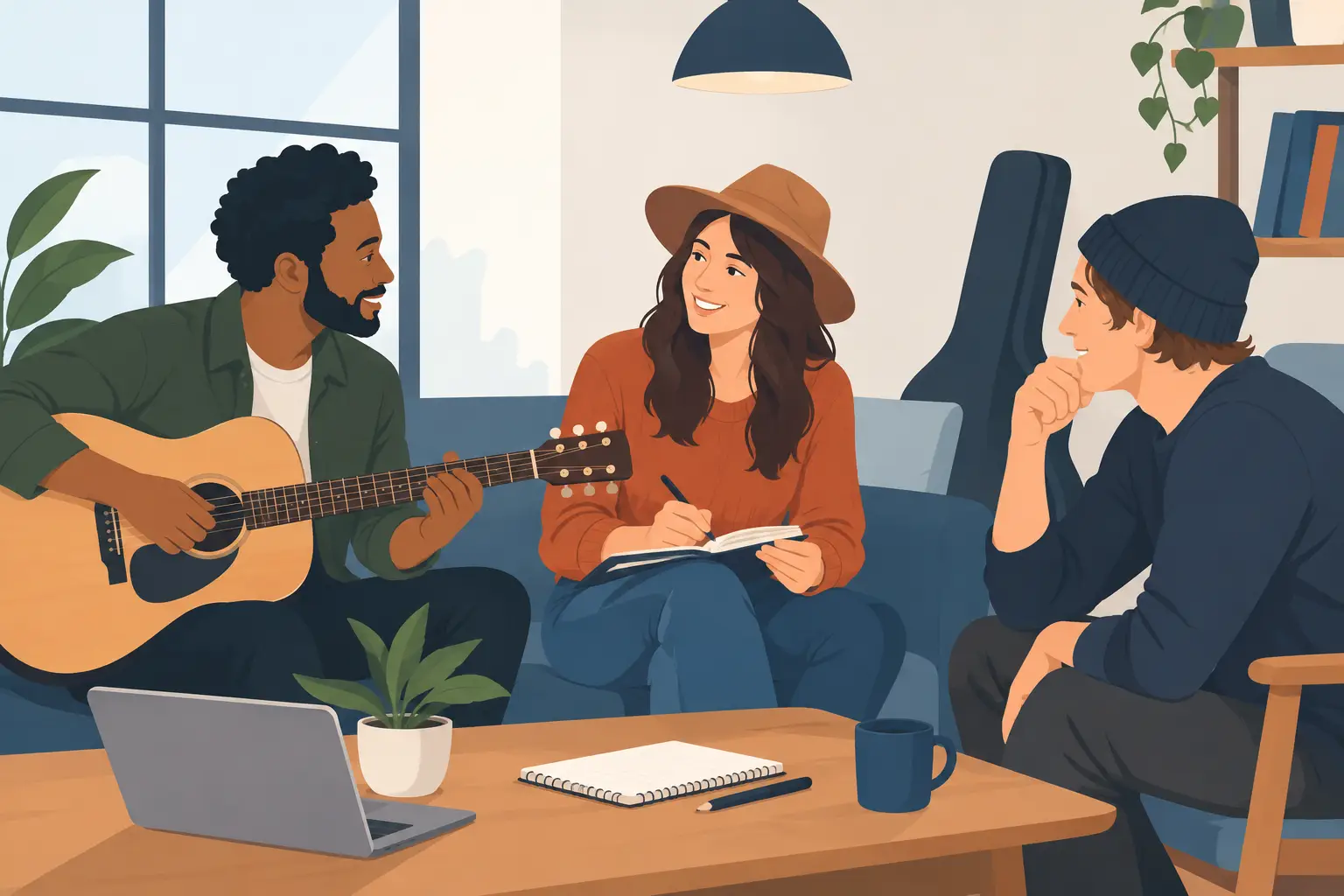
The best songwriting connection rarely begins with a perfect pitch. It starts in the queue after an open mic, during a break at a jam, or when someone says they liked the second verse of your set. If you want to meet local songwriters, the goal is not to collect contacts. It is to become a familiar, useful part of the scene where good creative conversations already happen.
Local songwriting can feel strangely hidden. Plenty of people are writing in bedrooms, rehearsal rooms and on night buses, but they may not call themselves songwriters yet. Others are established writers who need a fresh voice, a guitarist, a producer, or simply someone reliable enough to book a weekly session with. Showing up in the right places and making the next step easy changes that.
Where to meet local songwriters
Open mics are an obvious starting point, but approach them as more than a performance slot. Listen to the writers whose songs stay with you, then speak to them specifically. “I loved the way you changed the melody in the last chorus” lands far better than a vague “great set”. It proves you were present and gives the conversation somewhere to go.
Songwriter circles and writers' rounds can be even more direct. These events tend to attract people who care about the craft, not just performing. You may find artists who want co-writes, lyric feedback, musicians to help develop arrangements, or a low-pressure room to try unfinished material. Bring a song, but bring curiosity too.
Jam sessions are useful in a different way. Not every great instrumentalist writes, but plenty have strong melodic instincts, a feel for structure, or production skills that can take a half-finished idea somewhere new. A good co-write does not always begin with two lyricists in a café. It might begin with a bassist who finds the groove your chorus needed.
Local gigs matter as well, especially smaller bills where artists stay to watch one another. Arrive early, support the other acts and make time for a conversation after the set. Promoters, sound engineers, photographers and hosts often know who is actively making music in the city, so treat every person in the room as part of the local ecosystem.
Make yourself easy to collaborate with
Talent opens a conversation. Clarity gets a session in the diary. Before you start reaching out, be able to explain what you make and what you are looking for in a sentence or two. You might be a vocalist writing indie-pop hooks, a folk artist looking for stronger lyrics, or a producer who wants artists to write over new tracks. Specificity helps the right people recognise a fit.
Have two or three examples ready to share. They do not need to be fully released or professionally recorded, but they should show your musical direction. A simple phone demo can be enough if the song comes through. If you have performance clips, credits, recommendations or previous projects, keep them in one place so a new collaborator can understand your experience without digging through old social posts.
This is where a music-focused profile can do real work. Groovehub lets artists build a Groovecard™ with their skills, showreel, experience and artistic ambition, while also making it easier to see what is happening nearby. It gives a promising chat a practical next step: look each other up, see the work, and decide whether a session makes sense.
Your profile or introduction should feel honest, not over-polished. Say whether you are early in your writing journey, whether you can commit to regular sessions, and whether you prefer writing in person or sending ideas back and forth. The best local collaborations are built on aligned expectations, not impressive claims.
Turn a chat into a first co-write
Many good conversations fade because neither person suggests a next move. If someone feels like a creative match, make the invitation small and clear. Ask whether they would be up for a 90-minute writing session next week, or suggest swapping two demos and choosing one idea to develop. A defined first session feels easier to accept than “we should work together sometime”.
For that first co-write, choose a simple brief. It could be writing a chorus from a title, reworking an unfinished verse, or building a song around one reference track. Avoid arriving with a rigid plan that leaves no room for the other person, but do not turn up with nothing either. A few lyric fragments, voice notes or chord ideas create momentum.
Agree the practical basics early. Who is bringing the idea? Are you writing for either artist’s project, or just experimenting? How will you split credits if the song develops? There is no need to make a first session feel like a legal meeting, but openness prevents awkwardness later. If you record a strong demo, write down who contributed what while it is still fresh.
Chemistry is not the only measure of a successful session. You might not finish a song, but you can still learn that someone gives great feedback, writes excellent pre-choruses, or has a network that complements yours. Equally, it is fine to decide a partnership is not the right creative fit. Local scenes work better when people communicate kindly and keep the door open.
Build a reputation people remember
When you meet local songwriters, reliability is often more valuable than trying to appear endlessly busy. Reply when you say you will. Arrive prepared. Respect the time slot at a rehearsal room or café. If you promise to send a demo, send it. The music world is full of talented people with unfinished messages and missed sessions, so basic follow-through stands out.
Support other writers when there is no immediate benefit to you. Go to their next gig, share a useful opportunity, introduce them to a musician they should know, or give thoughtful feedback when they ask for it. This is not networking theatre. It is how trust moves through a local scene.
You should also be visible consistently rather than everywhere at once. Pick one or two recurring events you genuinely enjoy and become a regular. Hosts will learn your name, other attendees will see you more than once, and conversations can develop naturally. A packed one-off showcase may introduce you to dozens of people, but a monthly writers' night is more likely to produce a collaborator who remembers your song three weeks later.
Keep the collaboration moving
A new writing partnership needs a rhythm. Some pairs work best with a weekly in-person session; others send voice notes between gigs and meet once a month to finish ideas. There is no universal right approach. It depends on travel, work schedules, creative pace and whether you are building towards releases, live sets or a pitch catalogue.
Set a small shared target after the first successful session. Finish one demo this month. Write three choruses before the next open mic. Book a rehearsal to test the songs live. Clear goals stop a promising connection becoming another contact buried in your phone.
The local music scene is not a waiting room before something bigger happens. It is where you learn how to listen, collaborate, perform and build a reputation that travels with you. Go where songs are being shared, start the specific conversation, and make it easy for the right writer to say yes to the next session.