How to Build a Credible Musician Profile
7 September 2026
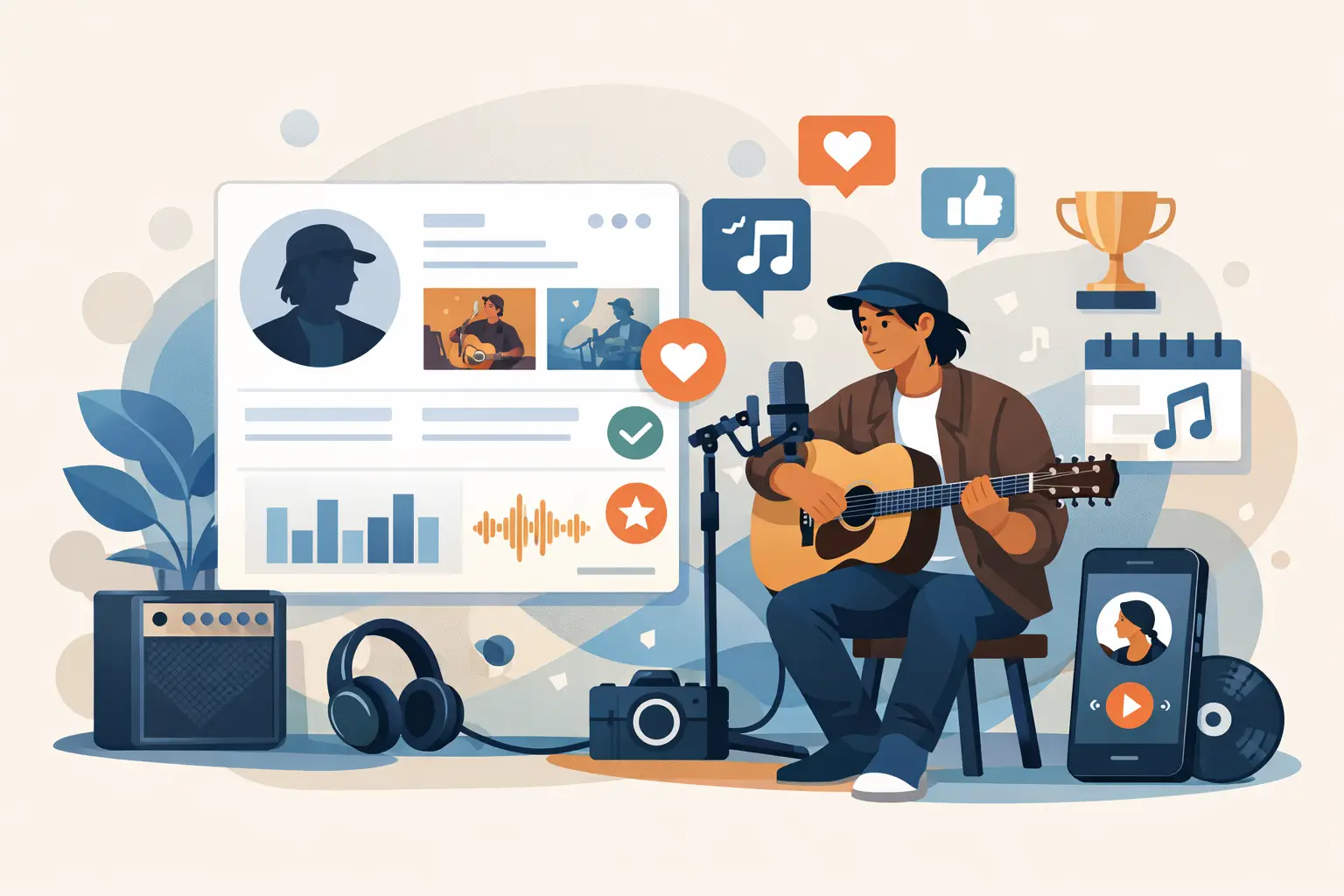
A promoter has a last-minute support slot. A bandleader needs a dep for Friday. A jam host is looking for a vocalist who can actually hold a room. In each case, people make quick decisions with limited information. To build a credible musician profile, make it easy for them to see what you do, hear how you sound and understand how you show up in a local scene.
Credibility is not about looking more famous than you are. It is about giving collaborators enough real, relevant proof to say yes with confidence. Whether you are playing your first open mic or leading a busy function band, a useful profile turns your experience into opportunities.
What makes a musician profile credible?
A credible profile answers the practical questions another musician, event host or music director will have before they message you. What is this artist's role? What styles do they genuinely play? Are they active? Can they perform live? Have others enjoyed working with them?
The strongest profiles do not rely on a polished bio alone. They connect a clear identity with evidence: recent clips, accurate credits, visible activity and recommendations from people who have worked with you. Think of it as a music-focused CV, but one that lets people hear and see the work rather than simply read about it.
This matters especially in local scenes, where reputation travels quickly but information is often scattered across group chats, social posts and word of mouth. A good profile gives your reputation a home without making you oversell it.
Start with a clear musical identity
Your opening details should be specific enough to help the right people find you. “Musician and songwriter” is true for many artists, but it does not tell a bandleader whether you are the soul singer they need for a showcase, or whether you can cover keys for a neo-jazz set.
Lead with your primary role, then add the skills that support it. For example: “Brighton-based guitarist specialising in indie, funk and soulful pop” is far more useful than a long list of every genre you have ever listened to. If you play multiple instruments, make your strongest and most bookable skill clear first.
Your location is equally useful. Local work is often practical: rehearsals, soundchecks and short-notice gigs. Saying where you are based and how far you are happy to travel helps organisers make a quick, realistic call. If you are open to remote recording or writing sessions, say so too.
Write a bio that sounds like you
A strong bio is short, human and grounded in real activity. Aim for a few sentences that cover your sound, the kind of work you do, and what you are looking to do more of. Mention a project, residency, regular jam or recent performance only if it adds context.
Avoid grand claims you cannot support. “The next big thing” does not build trust. “Regularly performing original material at songwriter nights across the city” does. The second line gives someone a useful picture of your momentum.
Show proof, not just potential
Talent is easier to assess when your profile includes a small selection of high-quality, relevant media. A live clip recorded on a phone can be more convincing than a heavily edited studio track if the opportunity is a live gig. It shows your timing, stage presence, sound and ability to work with other people in the moment.
Choose clips with purpose. A singer seeking wedding work might show a clean performance of a recognisable song. A bassist looking for originals projects could feature a clip that demonstrates feel, tone and musical restraint. A producer should include examples that make their creative contribution obvious.
You do not need ten near-identical videos. Three strong pieces can do more than an overloaded showreel: one that represents your main sound, one that demonstrates range, and one that shows you collaborating or performing live. Keep them recent where possible. If your sound, line-up or level has moved on, replace older material rather than letting it set expectations.
Credits work best in the same way. Include meaningful shows, releases, residencies, ensembles, theatre work, sessions or community projects. Be precise about your part in each one. “Played drums on” is clearer than implying you produced, wrote and performed an entire release.
Make recommendations earn their place
Recommendations are powerful because they show how you work, not only how you sound. A short note from a bandmate saying you learned a 20-song set quickly and arrived prepared tells a booker something a video cannot. A recommendation from a jam host might highlight your ability to listen, support other players and bring the right energy to the room.
Ask people who can speak to a specific experience. This could be a fellow artist, musical director, promoter, tutor, venue host or engineer. The best recommendation is not necessarily from the most recognisable name. It is from someone whose comment is credible, relevant and based on real work together.
Make the request easy. Remind them of the project or gig, and suggest the areas that would be most useful to mention, such as reliability, musicianship, communication or live performance. Do not write the praise for them. Genuine detail carries more weight than a generic endorsement.
Keep your profile active and accurate
An out-of-date profile creates doubt, even when the material is good. You do not need to refresh it every week, but revisit it after notable performances, new releases, a change in your availability or a shift in artistic direction.
Check the basics first: your current city, primary instrument, contact route, active projects and best clips. Then remove anything that no longer represents the level or type of work you want. A blurry video from years ago may have sentimental value, but it does not have to be the first thing a potential collaborator sees.
Accuracy also means being honest about your experience. Early-career musicians sometimes feel pressure to sound established, while experienced players can undersell themselves because their best work happened informally. Both approaches leave opportunities on the table. State what you have done clearly, then let the proof speak.
Build reputation where people can see it
A profile is strongest when it reflects genuine scene participation. Go to the open mic. Sit in at the jam when it is appropriate. Support other artists' sets. Follow up after a good conversation. These are not empty networking tasks - they are how people learn your sound, your attitude and whether you are good to share a stage with.
Online visibility cannot replace showing up, but it can make those real-world connections easier to continue. When someone meets you at a session, they should be able to find a clear record of your work afterwards. When a host hears your name from another musician, they should have enough context to decide whether you fit their night.
Groovehub brings that local discovery and professional visibility into one place, so your Groovecard can sit alongside the events, sessions and musicians that make up your city’s scene. Use it as a living record, not a static advert.
Match the profile to the opportunities you want
There is no single perfect musician profile because the right evidence depends on the work you want. A session player needs technical proof and dependable credits. An original artist needs a recognisable identity and compelling performance material. A covers musician benefits from showing repertoire, polish and audience connection.
You can have range without becoming vague. Keep one core identity, then use your bio, skills and selected media to point towards adjacent work. A jazz-trained pianist who also plays pop functions, for instance, can present both honestly while making it clear which bookings they are actively seeking.
Before sharing your profile, ask one simple question: if the right person landed here today, would they know why to contact me? If the answer is not immediate, sharpen the role, replace a clip or add the missing proof. The next collaborator may already be looking for exactly what you do.