How Promoters Verify Artist Experience Before Booking
29 September 2026
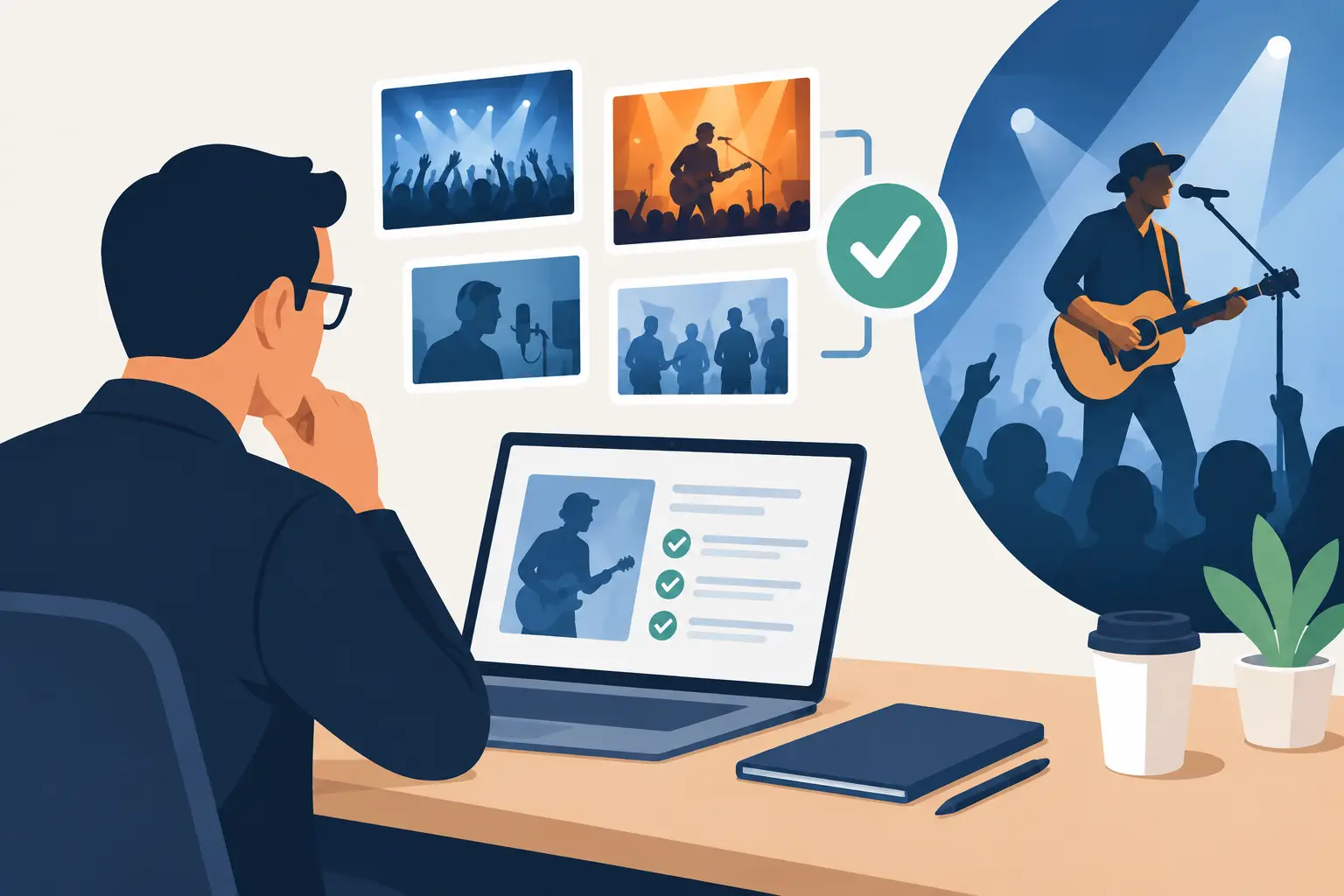
A promoter has a gap to fill, a room to fill and a reputation to protect. That is why how promoters verify artist experience is less about finding the biggest follower count and more about answering a practical question: can this artist deliver the right set, to the right standard, without creating problems on the night?
For emerging artists, that can sound intimidating. It should not be. Most promoters are not expecting everyone on a local bill to have a festival-sized press pack. They are looking for clear signs that you have played before, understand the setting and will be easy to work with. Present those signs well, and your experience becomes much easier to trust.
How promoters verify artist experience before booking
Promoters usually build a picture from several small pieces of evidence rather than one decisive credential. A great live clip may get their attention, but they will often look for confirmation elsewhere: past shows, a recommendation, a clear online presence and communication that feels organised.
The checks vary with the opportunity. A pub promoter putting on a three-act Thursday night may make a decision quickly after watching a video and exchanging a few messages. A venue booker, festival programmer or corporate events team will normally need more detail. They may want to know whether you can draw an audience, work to a schedule, provide the required equipment information and adapt to a particular room.
Experience is also relative. A singer-songwriter who has played ten attentive listening rooms may be a strong fit for a small theatre support slot, while a band with loud bar gigs behind them may be better suited to a busy weekend venue. The goal is not to appear experienced in every possible context. It is to make your relevant experience obvious.
They watch live footage, not just polished releases
Studio tracks show songwriting, tone and production. They do not always show whether a performance holds together in front of people. Promoters often start with live footage because it reveals timing, stage presence, audience connection and how an act sounds outside a controlled recording session.
One or two strong clips are more useful than a long folder of shaky phone videos. Choose footage where the sound is clear enough to judge, the full act is visible and the performance begins quickly. A clip from a real gig is especially valuable because it proves you have operated in the setting you are asking to be booked for.
Do not worry if the crowd is modest. Local scenes grow through smaller rooms, open mics, jam nights and support slots. What matters is that you look prepared and engaged. If a clip has poor audio but captures a great crowd response, pair it with another clip that demonstrates musical quality.
They look for a credible trail of shows
A simple performance history helps promoters understand your momentum. This can include venues, dates, support slots, showcases, open mics, residencies and notable jam sessions. It does not need to read like a celebrity biography. In fact, inflated claims can create doubt faster than a short, honest list of local appearances.
Recent activity matters. An artist who played regularly six months ago but has no current material or plans may be harder to place than someone actively attending sessions, collaborating and building towards their next show. If you have had a pause for work, study, caring responsibilities or a change of line-up, you do not need to explain your life story. Just make sure your current availability and project status are clear.
Promoters may also check event posts, venue pages and tagged content to confirm appearances. This is normal due diligence, not suspicion. Keep your public information consistent: use the same artist name, current line-up details and contact route across your channels.
They ask people they trust
Local music is still built on relationships. A recommendation from a host, sound engineer, fellow musician, venue manager or previous promoter can carry serious weight because it speaks to what happens around the performance.
Were you on time? Did you respect the running order? Was the changeover smooth? Did you promote the event? Did you treat staff and other artists well? These details are rarely visible in a highlight reel, but they are often what turns a one-off booking into a repeat invite.
Build references naturally by being part of the scene. Stay for other sets when you can, thank organisers, support the bill and follow up professionally after a show. Asking someone for a brief recommendation is reasonable once you have worked together, but it should reflect a real shared experience rather than a favour from a stranger.
What promoters are really checking beyond talent
Musical ability gets you considered. Reliability gets you booked again. Promoters are balancing ticket sales, audience expectations, technical limits and tight schedules, often while doing several jobs at once. An artist who reduces uncertainty is valuable.
Your first message can be part of the verification process. Address the promoter by name where possible, say why your act fits the event and include only the information they need to make a decision. A short description, a good live clip, recent gig highlights and a clear contact detail will usually beat a huge attachment full of unrelated material.
Be realistic about your draw. If an event asks about audience numbers, answer honestly. A committed group of ten people is more helpful than a vague promise to bring a crowd. Some gigs are based on ticket sales; others are curated for sound, community or a particular audience. Knowing the difference helps you pitch appropriately.
Technical readiness matters too. A promoter may check whether you have a stage plot, input list, backing-track setup or reasonable equipment requirements. For a solo acoustic set, this may simply mean confirming your vocal microphone and DI needs. For a seven-piece band, detail becomes essential. Clear information prevents last-minute surprises for the venue and engineer.
Make your experience easy to verify
The strongest artist profile does not force a busy promoter to piece together your story. It gives them a quick, accurate view of what you do and where you have done it.
Start with a focused bio. Say what kind of artist or band you are, where you are based and what a listener can expect live. Then add your best live footage, selected recordings and a concise list of relevant appearances. If you have testimonials, place them where they can be found easily rather than buried in old social posts.
A music-focused CV can make this much simpler. Groovehub's Groovecard lets artists bring skills, showreels, experience, recommendations and ambition into one professional view. For promoters, that means less chasing through scattered posts. For artists, it means the work you have already put into your local scene is visible when an opportunity appears.
Keep it current. Remove broken links, replace dated clips when your sound improves and update any changes to your line-up or contact details. A profile that was accurate last year can accidentally signal that a project has gone quiet.
There is a balance to strike. Too little information makes a promoter guess; too much makes it hard to find the important proof. Think like a booker scanning between meetings. Could they understand your act, hear you live and confirm you are dependable in under two minutes?
Build proof before you need a headline slot
You do not have to wait for a major booking to start building credible experience. Open mics, community showcases, jam sessions, support bills and collaborative nights all create useful evidence when approached professionally. Record the good moments, thank the people involved and keep a note of each performance while details are fresh.
Try to build variety with purpose. If you want to play ticketed venues, seek support opportunities where you learn set timing and promotion. If you want weddings or functions, collect evidence that you can handle requests, dress codes and longer sets. If you are aiming for festivals, show that you can work with tight changeovers and diverse audiences. Each route asks for slightly different proof.
Most promoters want to find artists who strengthen a bill and contribute positively to the scene. Give them a clear route to trust you, then keep showing up with the same energy once the booking lands. Your next opportunity is often watching long before it reaches your inbox.