Grassroots Venue Listing Guide for Musicians
21 September 2026
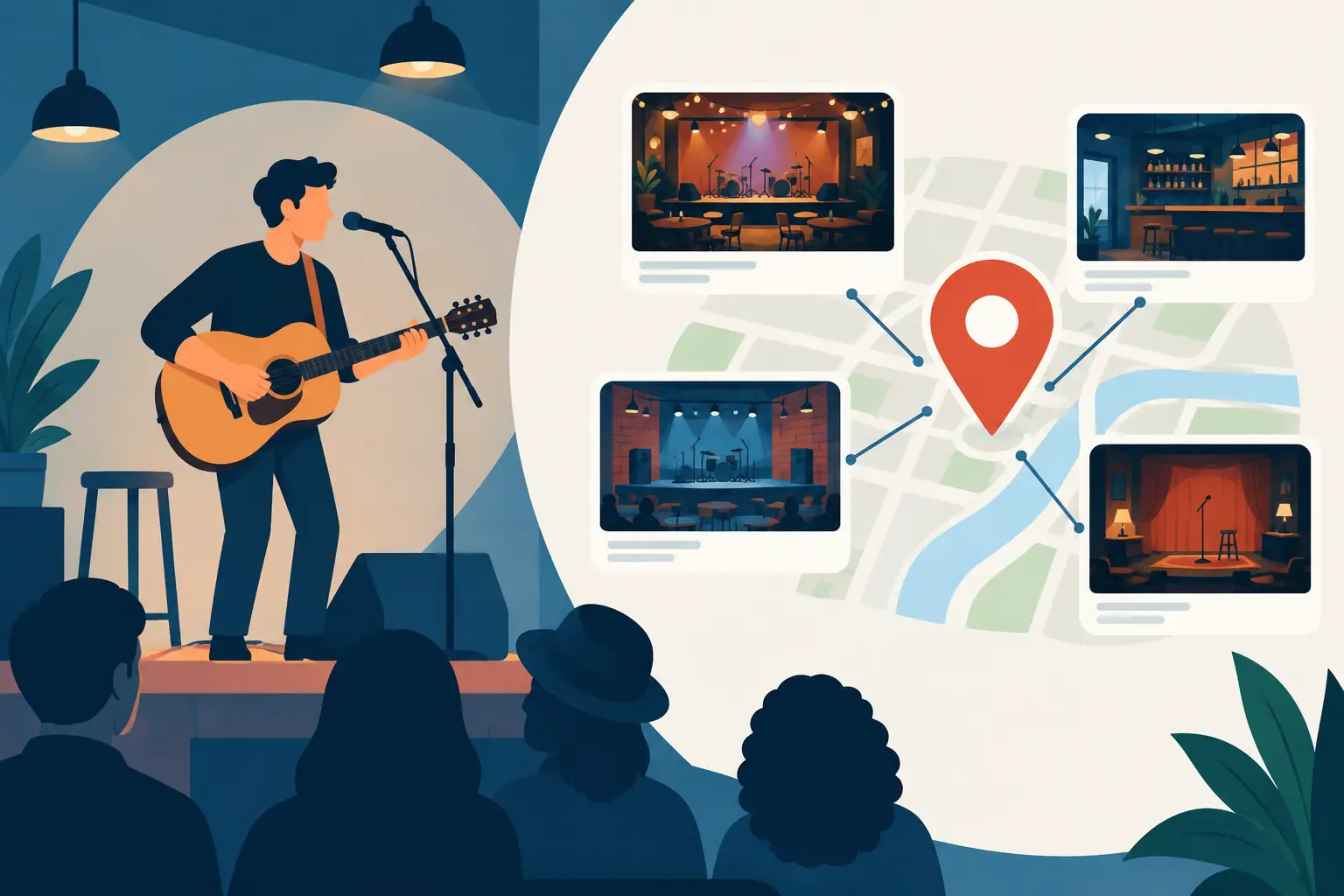
A great local gig can start with a room you have never heard of: a back room above a pub, an arts centre on the edge of town, a record shop after closing, or a café that hosts a packed Thursday open mic. The problem is not a lack of places to play. It is that the useful information is usually scattered across posts, group chats, outdated websites and hearsay. This grassroots venue listing guide helps musicians turn that noise into real opportunities.
Grassroots venues are where a local music scene proves itself. They give new acts a first stage, established players a place to try new material, promoters a way to build an audience, and listeners a reason to go out and find something different. A listing should do more than give an address and a date. Done properly, it tells artists whether a room is right for their sound, their stage of development and their next move.
Why grassroots listings matter more than a gig calendar
A generic events calendar answers one question: what is on? A useful venue listing answers the questions musicians actually have: who puts nights on here, what sort of acts work in the room, is there decent backline, does it pay, and how do you get on the bill?
That context changes how you spend your time. If you are a songwriter looking for a listening room, there is little value in chasing a late-night bar slot built around loud covers. If your band needs a proper drum kit and an engineer, a DIY space with a tiny PA may still be brilliant, but only if you plan for it. The best listings help artists make informed choices rather than simply collecting dates.
They also make scenes more open. When a venue, promoter or host clearly shares submission details, accessibility information and the format of the night, opportunities are not reserved for people already in the right WhatsApp group. That is good for artists, audiences and the venue itself.
What to look for in a grassroots venue listing
Start with the basics: venue name, neighbourhood, capacity, age policy, door time and a clear contact route. Then look beyond them. A strong listing should give you a feel for the room without pretending every night there is the same.
The musical fit
Look at recent line-ups, not only the venue’s branding. A place that calls itself eclectic may host separate nights for jazz, indie, metal, folk or electronic music, each with different bookers and audiences. Find the promoter behind the specific night you want to play.
Consider the format too. An open mic, jam, support slot and ticketed headline show offer different value. Open mics can be ideal for meeting players and testing material. Jam sessions are useful when you want to be seen as a collaborator. A support slot can put you in front of a defined audience, but may require a stronger live set and a more polished stage setup.
The practical reality of the room
Technical details save awkward messages later. Check whether the venue provides drums, guitar amps, DI boxes, microphones, monitors and an engineer. Ask about changeover times, soundcheck arrangements and curfews. If no backline is supplied, that does not make the date a bad one. It just affects transport, costs and whether the set is realistic.
Capacity needs context as well. A 70-capacity room that consistently fills for the right kind of night can be more valuable than a larger venue with a disengaged crowd. Pay attention to ticket history where it is available, typical door deals and whether the venue expects artists to bring a minimum audience. Be honest about your draw. A well-matched smaller room often creates better momentum than an ambitious empty one.
The people behind the night
Grassroots music runs on relationships, but that should not mean guesswork. A listing is more useful when it identifies the promoter, booker, resident host or collective running the event. Their track record tells you a lot about the atmosphere, the quality of production and how artists are treated.
Recommendations from other musicians matter, especially when they are specific. “Great night” is nice. “Clear advance, fair door split, helpful sound engineer and a responsive promoter” is genuinely useful. A music-focused profile such as a Groovecard can make these trusted signals easier to see, while giving bookers a quick picture of your live experience.
How to use a grassroots venue listing guide strategically
Do not search only when you are desperate for a gig. Keep a live shortlist of rooms and nights that suit your project, even if you are not ready to approach them yet. Watch their programming for a few weeks. Notice who gets repeat bookings, which nights sell out and how support acts are chosen.
Then divide your shortlist by purpose. You might have a regular open mic for low-pressure performance practice, a jam for meeting bassists and drummers, a promoter-led showcase for audience growth, and one aspirational room to target once your live set is ready. This stops every opportunity being judged by the same measure.
When you contact a booker, reference the night rather than sending a blanket message. Say why your sound fits, what date range you are looking at and what your live setup involves. Include a concise artist introduction, a performance clip and any relevant local shows or recommendations. Keep it easy to scan. Promoters are often juggling venue staff, ticketing, artists and last-minute changes, so clarity is part of being easy to work with.
Be patient with replies, but do not leave a vague conversation hanging. If you have not heard back after a reasonable period, send one polite follow-up. If there is still no response, move on and keep building elsewhere. A healthy local scene has more than one route into it.
If you list a venue or event, make it useful
Venue owners, promoters and event hosts have a major role in reducing the friction that keeps good artists off good bills. An accurate listing is not admin for its own sake. It is an invitation to the right people.
Include these details before publishing:
- The genre, format and expected level of the night, from beginner-friendly open mic to curated ticketed bill.
- The exact stage setup, including backline, PA, sound engineer, set lengths and changeover expectations.
- The booking route, submission deadline, fee or payment arrangement, and whether artists are expected to sell tickets.
- Access information for performers and audiences, including step-free entry where available, loading arrangements and curfew.
- A current contact name or account so artists know who is actually responsible for the programme.
Avoid inflated descriptions. Calling every night “the biggest” or “unmissable” does not help an artist decide whether to apply. Specificity does. Mention if the room is intimate, if original music is required, if the audience is mainly fellow musicians, or if the night is designed for artists developing their first 20-minute set.
Keep the listing current, too. A cancelled jam, changed host or expired submission call can waste an artist’s evening and damage trust quickly. If a format has changed, update it. If bookings are closed, say so. Small acts often make plans around public transport, borrowed gear and work shifts. Reliable information is a form of respect.
Read the signs before you commit
Not every grassroots opportunity is a good fit, and saying no is sometimes the professional choice. Be cautious when a promoter cannot explain payment, repeatedly changes terms, requests large upfront fees with no clear value, or expects you to sell an unrealistic number of tickets. There are legitimate hire nights and pay-to-play models, but the arrangement must be transparent enough for you to assess it.
The opposite is also true: a low-paid or unpaid show is not automatically exploitative. A charity event, a first community showcase or a well-curated support slot may offer genuine exposure, footage, connections or a chance to play with artists you respect. The trade-off depends on your costs, goals and the people involved. Know what you are saying yes to.
After each show, add your own notes. Did the audience match the bill? Was the sound good? Did the promoter communicate well? Did you meet people you would work with again? Over time, your personal venue list becomes more valuable than any one-off search result.
The strongest grassroots scenes are not built by gatekeepers with perfect contacts. They are built when artists, hosts and venues share accurate information, show up for one another and make the next opportunity easier to find. Start with one room that fits your music, contribute something useful to the community around it, and let the next connection grow from there.