Gig Opportunity Platform Review for Musicians
13 October 2026
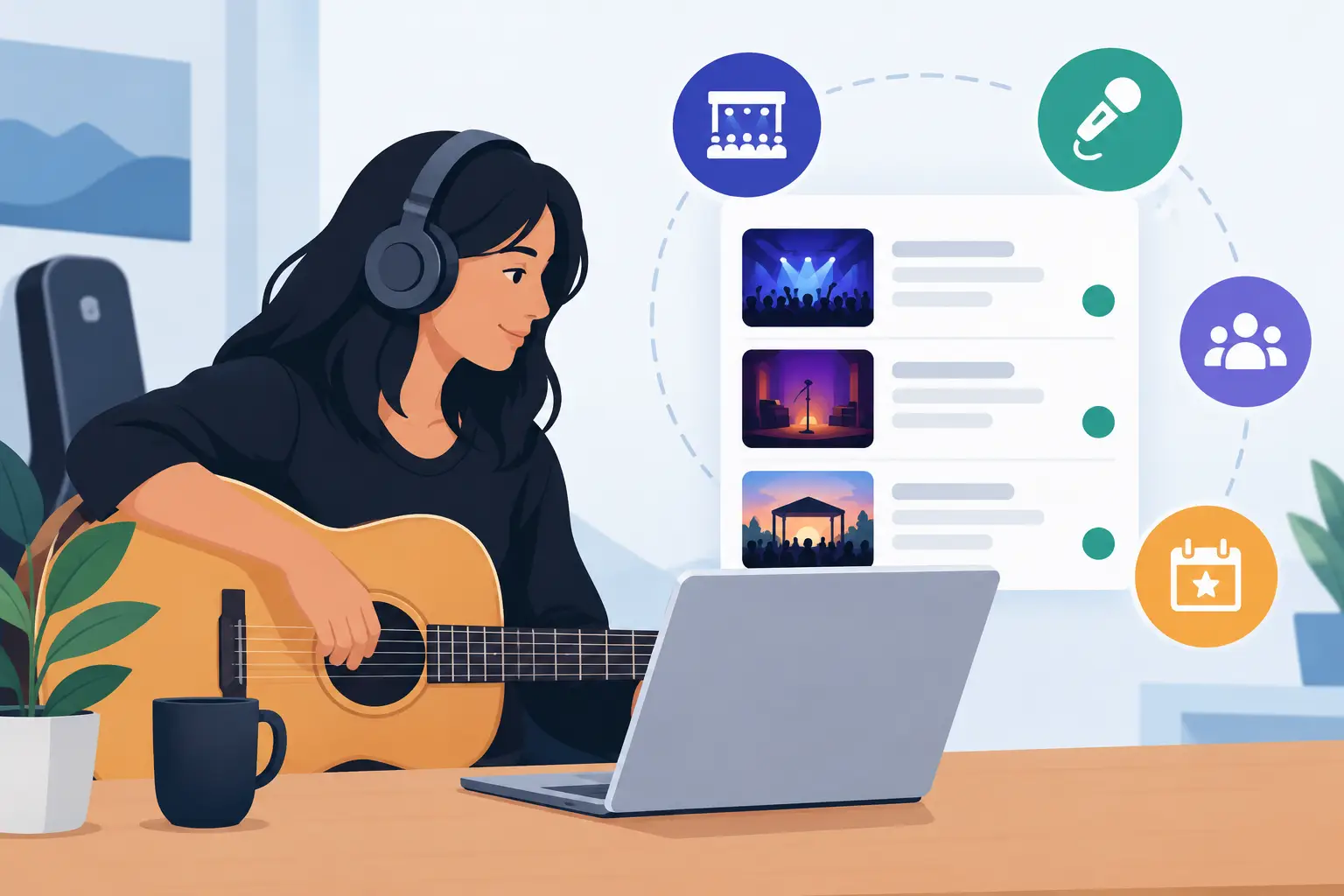
A useful gig opportunity platform review should answer a simple question: will this help you spend less time chasing scattered posts and more time playing, meeting people and building momentum? For working musicians, a platform is only as good as the opportunities it surfaces, the people behind them and the reputation you can build while taking part.
Local music scenes have always run on a mix of friendships, group chats, venue noticeboards and whoever happened to hear about a jam first. That energy is part of what makes a scene feel alive. But it can also mean great open mics, dep opportunities and collaborators are easy to miss. The right platform should make the useful information easier to find without flattening the human side of music-making.
What a gig opportunity platform should actually do
Not every opportunity needs to be a paid Friday-night slot at a packed venue. A strong local platform recognises that an open mic can lead to a new bandmate, a jam can sharpen your confidence, and a one-off supporting set can put you in front of the right promoter. It should show the full path of participation, from your first local session to more regular paid work.
Start with the listings. Can you quickly see what is happening nearby, when it is happening and who it is for? A useful event listing gives enough context to help you decide whether to go: genre, format, location, start time, sign-up details and whether performers need to bring an instrument or backing tracks. Vague posts that say only “musicians wanted” create admin for everyone.
Freshness matters just as much. A platform can have hundreds of old listings and still be less useful than one with a smaller, active calendar. Look for signs that events are maintained, cancelled dates are removed and hosts can update details without friction. If the information is current, you can plan your week with confidence rather than sending five messages to confirm a session still exists.
Opportunities should fit real musical lives
The best platforms do not assume every artist wants the same thing. A singer-songwriter may be looking for a supportive room to test new material. A drummer might want a last-minute dep call. A band leader may need a keys player for two rehearsals and a showcase. A promoter may be searching for local support acts with a credible live record.
That means filtering is not a luxury. Being able to search by city, instrument, genre, event type or opportunity type turns a noisy feed into something practical. It also helps musicians discover opportunities slightly outside their usual orbit. A jazz player might find a funk jam; an electronic producer might meet a vocalist at a songwriting night. Good discovery creates those useful overlaps without making people scroll through irrelevant posts.
There is a trade-off here. Very detailed forms can make listings more accurate, but they may discourage busy hosts from posting at all. The sweet spot is a quick route to publish the essentials, with optional details for people who need them.
Gig opportunity platform review: check the trust layer
A listing gets you through the door. Trust helps you decide whether the room, organiser or collaborator is right for you.
Generic social platforms are good at reach, but they rarely show the context behind a musician’s name. You may see a brilliant video clip, yet still not know whether that player is reliable, what styles they work in or whether they have experience leading a band. For local scenes, credibility is usually built through repeated real-world interactions.
Look for artist profiles that give people a fuller picture. A useful profile should make space for instruments, genres, experience, showreels, past performances and current ambitions. It should be easy to understand whether someone is seeking gigs, collaborators, tuition work or a place to play regularly. This saves awkward back-and-forth and leads to better introductions.
Recommendations can add real value when they are grounded in specific musical experience. “Great musician” is kind, but “learned a difficult set quickly, arrived prepared and lifted the whole function band” tells a booker far more. The goal is not to turn local music into a corporate ratings system. It is to give artists a fairer way to show the reliability and contribution that often stay invisible online.
Be wary of platforms that promise opportunity without any indication of who is posting. Paid gigs should make expectations clear, including fee, set length, location and any unusual costs. Unpaid opportunities are not automatically a bad deal - a well-run showcase or jam can be valuable - but the exchange should be honest. Exposure is not a substitute for transparent information.
Community density beats a huge empty directory
The most impressive feature list means little if no one in your area uses the platform. Local density is what turns a directory into a scene resource.
Before joining, check whether the platform has active listings in your city and whether profiles feel connected to real venues, sessions and people. You are looking for signs of participation: artists updating their work, hosts adding events and members recommending people they have actually played with. A smaller network with regular activity can be much more useful than a global platform where everyone is technically present but nobody is available nearby.
This is also why community-first platforms work best when members contribute, not just browse. If you know about a great Tuesday jam, listing it helps the next musician find their way in. If a collaborator delivered the goods, a thoughtful recommendation makes their profile more useful. Those small actions create a clearer route into the scene for newcomers and strengthen the connections already there.
Groovehub takes this local approach by bringing event discovery and a music-focused digital CV, the Groovecard™, into the same space. For artists who want both a clearer view of what is on and a more professional way to be found, that combination is more practical than juggling a venue calendar, social feed and a folder of scattered clips.
Visibility is useful only when it leads somewhere
Profiles can become another unfinished task if they are difficult to create or never appear in relevant searches. A good platform should let you present yourself professionally without demanding a marketing degree. Add the essentials, show what you do well and make it easy for the right people to contact you.
Your profile should also reflect where you are now, not force you to perform a version of success you have not reached yet. Emerging artists deserve a place beside established players. A strong showreel, a clear ambition and a few genuine recommendations can be enough to start conversations. As your experience grows, your profile should grow with it.
For bookers and event hosts, the benefit is equally direct. Instead of posting into a broad social feed and hoping the right person sees it, they can find musicians with relevant skills and local availability. Better matching reduces last-minute panic and gives more artists a chance to be considered on merit.
How to test a platform before relying on it
Give any platform a practical two-week test. Create a complete profile, save a few relevant events and contact or attend one opportunity that genuinely suits you. If you host events, post one with clear details and see whether the process is quick enough that you would use it again.
Pay attention to the quality of interaction, not just the number of notifications. Are people replying? Do listings have enough detail? Can you tell who is credible? Are you finding sessions and artists you would not have encountered otherwise? A platform that creates one valuable rehearsal, booking or introduction can be worth more than a large feed full of passive likes.
It also depends on your goal. If you tour nationally, you may need a broader booking network alongside a local platform. If you are new to a city, local discovery and regular community events may be the priority. If you already have a band but need dependable deps, searchable musician profiles could matter most. Choose the tool that removes your current bottleneck rather than the one with the loudest claims.
The best gig opportunity platforms do not replace the buzz of walking into a busy room, introducing yourself and hearing a band tear through a song. They make it easier to know which room to walk into next - and make sure that when you are ready, the local scene can find you too.