The Future of Local Music Discovery in Cities
9 October 2026
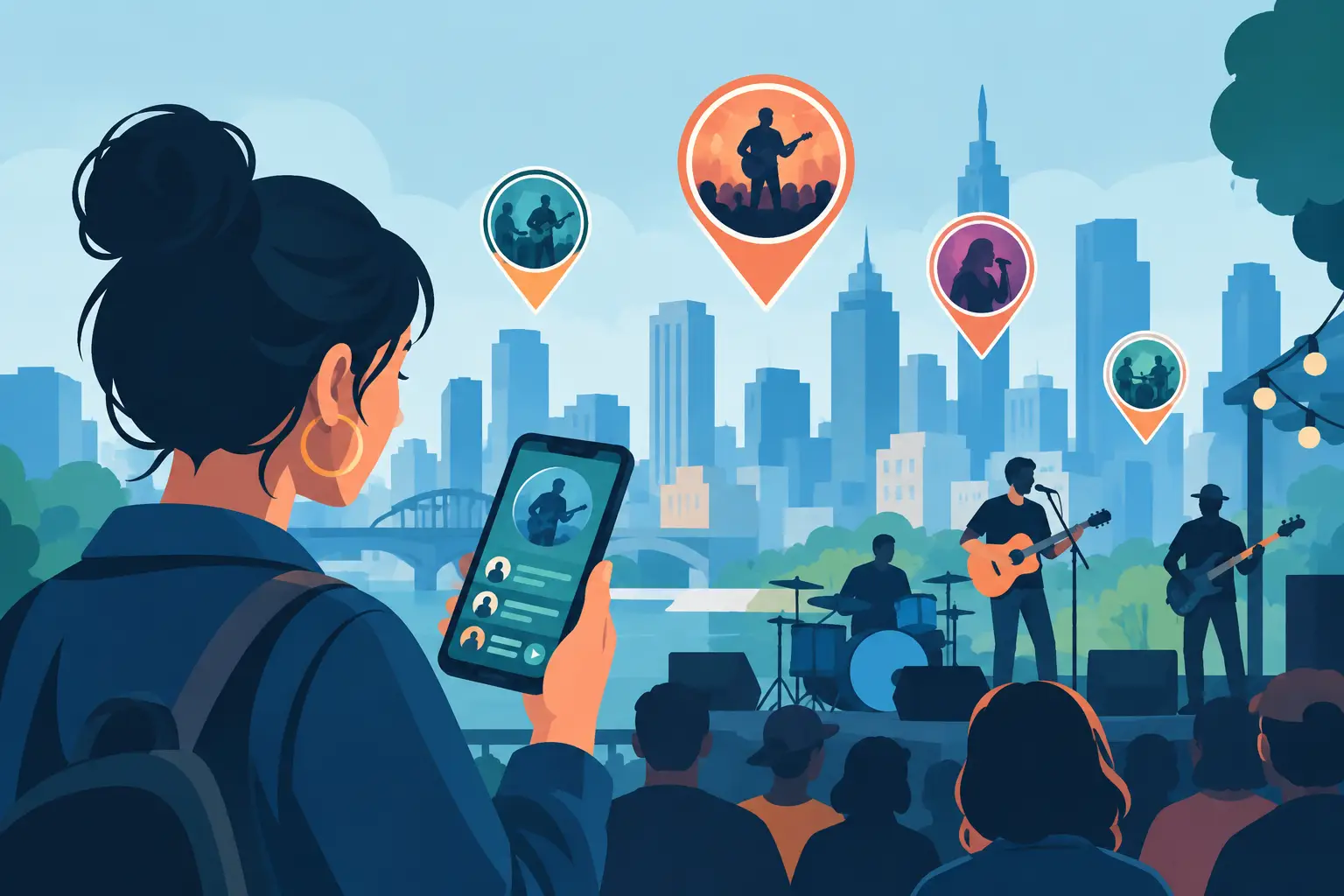
A brilliant bassist can still be two streets away from the band that needs them. A packed open mic can still go unnoticed by the songwriter looking for their first proper room. That gap is exactly why the future of local music discovery will not be decided by bigger follower counts alone. It will be shaped by better ways for people in the same city to find each other, show up and build trust.
Local scenes have always run on energy: a friend’s recommendation, a promoter remembering your set, a late-night conversation after a jam. Those moments matter. But when event details are scattered across group chats, disappearing Stories, venue pages and word of mouth, too many opportunities stay hidden. The next generation of music discovery needs to make local participation easier without losing the human spark that makes a scene worth joining.
Local discovery is moving from feeds to participation
Generic social platforms are useful for broadcasting. Post a clip, announce a gig, share a new release and reach the people who already follow you. The problem is that feeds are not built around the practical question musicians ask every week: what is happening near me, and who should I meet there?
A local scene needs more than content. It needs context. Is this open mic welcoming to original artists? Does the jam have a house band? Is a venue looking for support acts? Which players are active, reliable and right for a particular project? Those answers are often held by a small number of well-connected people, leaving newer artists to piece things together slowly.
The future will favour platforms and communities that turn this hidden knowledge into useful, visible information. That means location-led event discovery, clear artist profiles and community signals that help people decide where to spend their time. It is less about scrolling past endless posts and more about finding a real reason to leave the house with your instrument.
For musicians, this changes discovery from a passive habit into an active part of building a career. You do not just watch the local scene from your phone. You find a session, attend it, meet people and become easier for the right collaborators to find next time.
Reputation will become more visible and more useful
In local music, reputation is already everything. Can you learn material quickly? Do you turn up on time? Are you good to work with? Can you hold your own on stage? These are the details that lead to repeat calls, dep work and introductions.
Yet most mainstream profiles make it hard to show that kind of credibility. A strong photo and a polished video clip have value, but neither tells the full story of someone’s musical life. A drummer may have years of function experience. A singer may be known for leading a great jam. A producer may be the person several artists trust to finish their tracks. Those strengths deserve a place to be seen.
Digital artist CVs, showreels, recommendations and experience-led profiles can make local reputation clearer. They give musicians a way to present themselves professionally before the first message is sent. For bookers and band leaders, they reduce the guesswork when searching for someone suitable.
There is a balance to get right. Music cannot be reduced to ratings, and a recommendation should never become a closed door for artists at the start of their journey. The best systems will pair visible experience with room for ambition. Someone with three great performances and a thoughtful profile may be exactly the person a new project needs.
The future of local music discovery is city-first
A global audience can be valuable, especially for releases and online fan communities. But most working opportunities begin close to home. Rehearsals happen in local rooms. Last-minute dep calls are usually city-based. Relationships with promoters, photographers, engineers and fellow artists grow through repeated contact.
This is why city-first discovery matters. It gives musicians a clearer view of the ecosystem around them: events this week, people making similar work, venues supporting new acts and professionals open to collaboration. It also allows each city to keep its own character. Brighton’s songwriter nights do not work in quite the same way as New York’s late-night jams, and neither should be forced into one generic template.
Density is the real advantage. When enough artists, hosts and venues take part, each contribution makes the network more valuable. An event listing helps musicians plan their week. A completed profile helps a band leader search with confidence. A recommendation gives a talented newcomer a little more visibility. Small actions build a more connected scene.
That is the infrastructure Groovehub is designed to support: a place where discovering events and presenting your musical experience work together, rather than living in separate corners of the internet.
Event listings will need to answer the questions artists actually ask
A basic listing with a date, time and postcode is better than nothing. It is rarely enough to help a musician decide whether an event is worth the journey, the tube fare or the rehearsal time.
Useful local discovery gives people the details that shape participation. Is there a sign-up process? What genres fit the room? Is backline provided? Is the event accessible? Does it run weekly, and what time does the final set normally finish? For artists travelling across a city after work, practical information is not a bonus. It is the difference between attending and missing out.
Promoters and hosts benefit too. Clear listings attract more suitable performers and set expectations early. That can mean fewer awkward messages, stronger bills and a better experience for the audience. It is not about making every event look identical. A jazz jam, an acoustic writers’ round and a loud DIY showcase should each communicate their own atmosphere honestly.
Human recommendations will still beat empty reach
Algorithms can surface options, but they cannot fully understand chemistry. A recommendation from a musician who has shared a stage with someone carries a different kind of weight. It says: this person can play, communicate and contribute to the room.
The future is not algorithm versus community. It is technology that makes community knowledge easier to find. Search can help a band leader narrow down singers in their area. Profiles can reveal range and experience. Recommendations can add the human detail that turns a shortlist into a confident booking.
This matters most for artists who do not have massive online numbers. Local scenes are full of exceptional players whose value shows up in rehearsal rooms, on small stages and through the people who trust them. Better discovery should widen access to those artists, not reward only the loudest self-promotion.
What musicians can do now
You do not need to wait for a perfect platform or a huge network to benefit from this shift. Start by making your musical identity easy to understand. Be specific about your instruments, styles, experience and the kinds of opportunities you want. Keep a short, relevant showreel ready, and ask for recommendations after positive collaborations while the details are fresh.
Then make discovery a weekly habit. Look for one event you can attend, one person you can support and one opportunity where you can contribute. Showing up consistently creates more momentum than broadcasting endlessly to people who are nowhere near your scene.
For venues, promoters and jam hosts, the opportunity is just as strong. Publish accurate event information, welcome new faces and make it clear how artists can get involved. A healthy scene is not built by gatekeeping the room. It is built by giving great people a clear path into it.
The most exciting local music scenes will still be noisy, unpredictable and gloriously human. The difference is that fewer talented people will be left outside the conversation. Make your work visible, make your events findable, and keep turning online discovery into real-world musical moments.