12 Best Tools for Gigging Musicians in 2026
17 July 2026
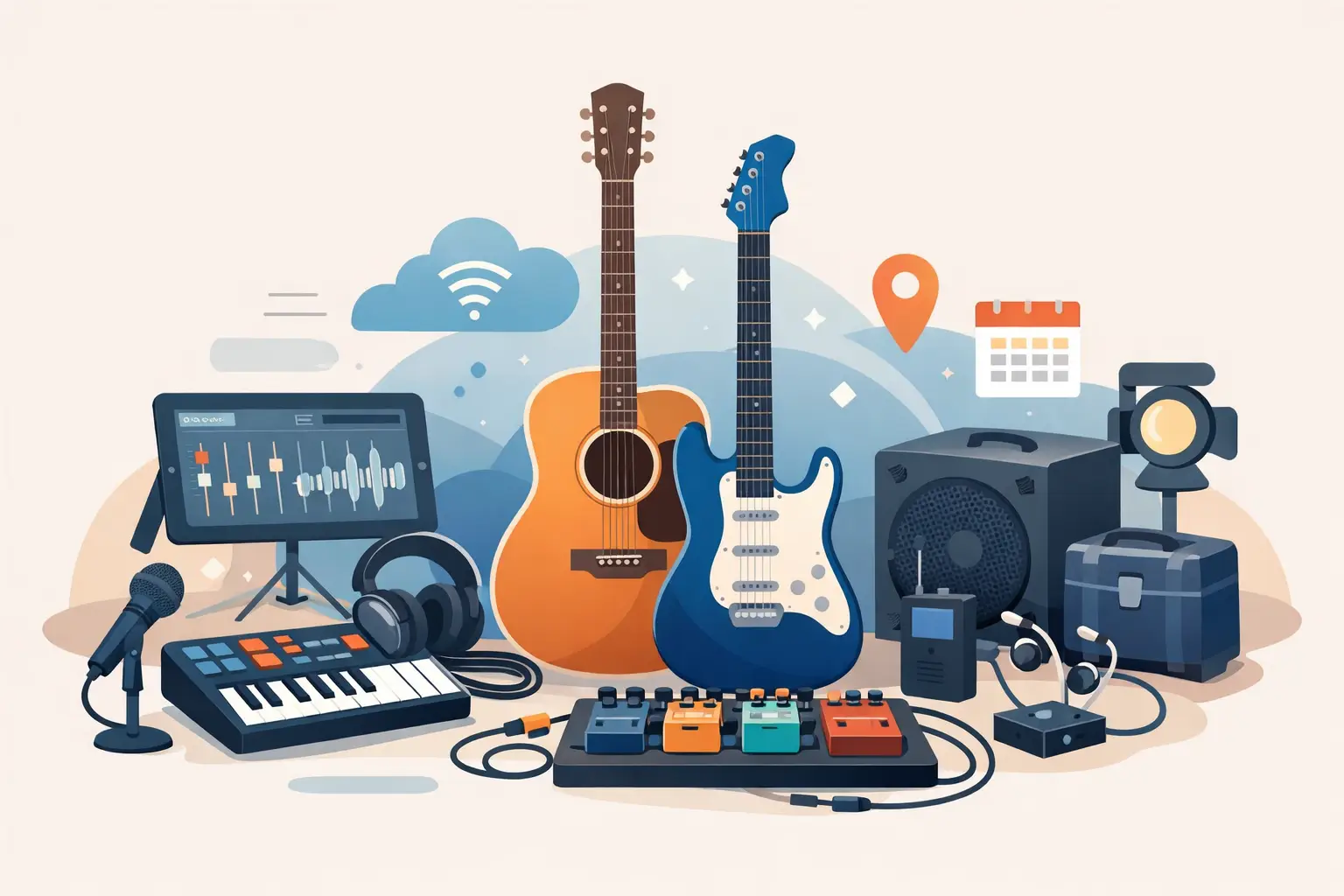
A great gig can fall apart over something painfully small: a dead phone battery, a missing cable, a setlist nobody can read in low light, or a dep who cannot find the venue. The best tools for gigging musicians are not always the flashiest bits of gear. They are the ones that keep the music moving, make you easier to work with, and help the next opportunity find you.
For local artists, the right setup is part sound, part organisation and part community. You do not need to buy everything at once. Start with the tools that solve the problems you actually meet on stage, in rehearsal rooms and while chasing the next date in your city.
The best tools for gigging musicians, sorted by real need
1. A dependable tuner and spare batteries
A clip-on tuner is small enough to forget until it saves the first song. Choose one with a bright display that you can read under coloured stage lights and enough grip to stay put on a headstock. Bassists and acoustic players may prefer a pedal tuner for a muted signal path between songs.
The useful part is the backup plan. Keep spare batteries in the same pouch as the tuner, labelled and checked. Rechargeable batteries can work well, but only if they are fully charged and you have a second set. A three-minute delay while someone searches through a gig bag is avoidable stress.
2. A setlist system everyone can follow
Paper still wins in many rooms. It does not crash, lock, lose signal or disappear when a phone screen dims. Print a large, clean setlist with song keys, lead vocals, count-ins, medley notes and approximate running times. Tape it to the floor or your pedalboard if there is no music stand.
Digital setlists are brilliant for larger bands with changing arrangements. A shared folder or dedicated setlist app lets everyone access the current order, charts and reference recordings. The trade-off is simple: phones and tablets need power, and every member needs to use the same version. For important shows, use both digital access and a printed copy.
3. Charts that make rehearsals faster
Whether you read notation, chord sheets or Nashville numbers, clear charts save rehearsal time and make last-minute line-up changes less scary. Keep one consistent format across your repertoire. Put the title, key, tempo, structure and any vital hits at the top, then make sure page turns are practical.
A tablet with a solid stand is especially useful for function musicians, MD-led shows and artists covering a lot of material. It is less useful if you are playing a high-energy pub set where the screen becomes another thing to protect from spilled drinks. Know the room you are walking into.
4. A cable kit built for bad surprises
Most gigging musicians own cables. The difference is having the cables the gig actually needs. Your kit should include your main instrument lead, a spare of equal quality, short patch leads if you use pedals, an extension lead, a multi-socket adaptor and a couple of different audio adaptors.
Add a roll of gaffer tape and a marker pen. Tape down a dangerous cable run, label a power supply, mark your mixer channel, fix a setlist to a monitor. Neither looks glamorous in an Instagram post, but both belong in a professional working setup.
5. A compact stage power solution
Pedalboards, tablets, wireless units and phone chargers all compete for plug sockets, particularly at smaller venues. A compact surge-protected extension lead with a long enough cable gives you more control over your corner of the stage. If your rig has multiple pedals, a properly isolated power supply can reduce hum and make troubleshooting much easier.
Do not assume every venue has safe, accessible power where you want it. Arrive early, check the stage layout and keep power cables away from walkways where possible. This is not glamorous prep, but it protects both your gear and everyone in the room.
6. A DI box or preamp that earns its place
For acoustic guitarists, bass players, keys players and electronic artists, a reliable DI box can be the difference between a quick soundcheck and a confusing one. It gives the engineer a balanced signal and often helps control ground noise. A preamp DI is worth considering if you need EQ, gain control or a consistent core sound across unfamiliar systems.
This is one area where buying the cheapest option can be false economy. You do not need a huge rack of equipment, but you do need a box you trust. Test it at rehearsal, learn what every switch does, and pack the cable needed to connect it.
7. Hearing protection designed for musicians
If you play regularly, decent filtered earplugs are essential kit. They lower volume while keeping the balance of the music more natural than foam plugs. That means you can still hear cues, pitches and conversation without leaving every rehearsal with ringing ears.
Custom moulded plugs can be a smart investment for musicians playing loud stages every week. Universal filtered plugs are a more accessible starting point and fit easily in a keyring case. The best option is the one you will actually remember to take to every gig.
8. In-ear monitoring, when it fits the show
In-ear monitors can make a cramped or noisy stage far more manageable. You can hear vocals and timing clearly, control your own mix, and reduce the urge to turn everything up. They are particularly useful for bands using tracks, click, backing vocals or detailed arrangements.
They are not automatically right for every local gig. A good in-ear setup takes rehearsal time, proper gain staging and musicians who understand their monitoring needs. For a relaxed open mic or quick house-band slot, a simple wedge may be quicker and more sociable. Start with the problem you are trying to solve, not the gear trend.
9. A simple recording setup for reviewing shows
A phone on a small tripod can capture a surprising amount of useful information. Record rehearsals and gigs to check tempo, transitions, vocal blend, audience response and stage presence. The footage does not have to be a polished release to help you improve.
For content you plan to share, an external phone microphone or compact stereo recorder will give you a clearer result than a phone buried beside a loudspeaker. Always ask the venue and other performers before filming, especially at jam sessions and collaborative nights. A quick conversation keeps trust in the scene intact.
10. A payment and merch setup that is ready before doors open
If you sell merch, CDs, tickets or take tips, make payment easy. A card reader, visible QR payment code, float for cash and a simple stock list can turn post-show interest into real support. Keep prices clear and make it possible for someone to buy while you are loading out or talking to the promoter.
Merch is not only about income. A sticker, tote or physical release gives a new listener a reason to remember your name after a busy night. Keep the table tidy, bring a bag for unsold stock, and assign someone to watch it if you are due on stage.
11. A professional digital artist profile
The best gig tool may be the one working when you are not. Promoters, collaborators and musical directors need a quick way to understand what you do, hear your work and see whether you are active. Keep a current profile with your role, genre range, live clips, experience, contact details and the kind of opportunities you want.
A Groovecard on Groovehub can make that local credibility easier to show while helping other musicians find you for jams, open mics, dep work and new projects. Keep it honest and current. A sharp 30-second live clip and a clear description are more valuable than a long, outdated bio.
12. A gig bag checklist and a post-show routine
The final tool is a system. Make a checklist for your instrument, cables, power, tuner, charts, hearing protection, water, ID, payment kit and any venue-specific gear. Save it on your phone and tape a printed version inside your case. Check it before leaving home and again before leaving the venue.
After the show, pack the same way every time. Count your stands, check your leads, back up any recording and message the people you promised to follow up with. That small routine turns a good performance into a reputation for being reliable.
The strongest gig setup is not the biggest one. It is the one that lets you arrive prepared, play freely and leave room for the conversations that lead to the next stage.