Artist Discovery Case Study: From Jam to Gig
7 October 2026
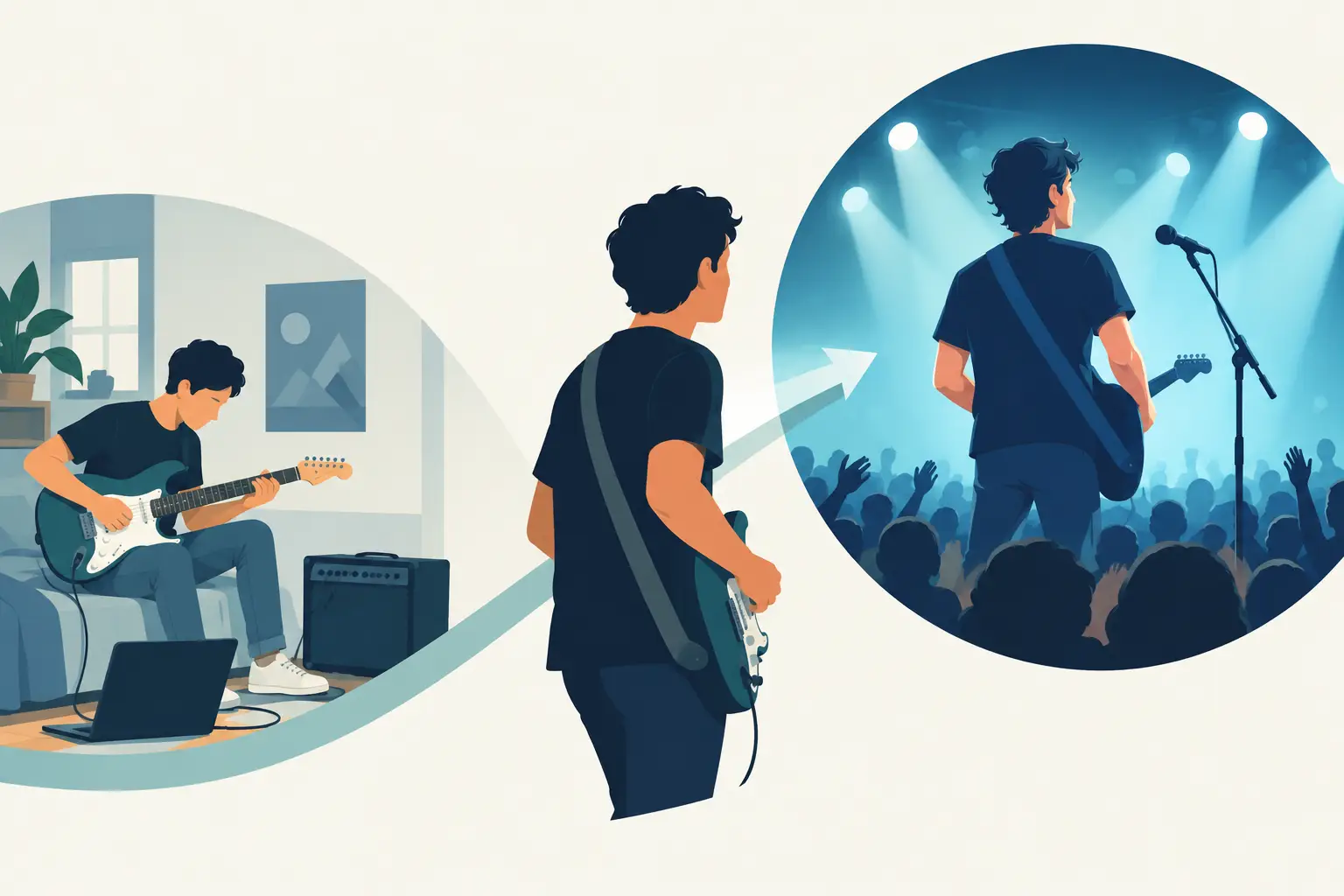
A great local musician can still be invisible on a busy Thursday night. Not because they lack ability, but because the right people do not know where to find them, what they play, or whether they will turn up prepared. This artist discovery case study follows a familiar local-scene problem: how a talented player moved from occasional jams to regular opportunities by making their skills, reputation and availability easier to see.
This is a realistic composite based on the way musicians build momentum in city scenes. The details are simplified, but the barriers are real: scattered event listings, social feeds that move too fast, and a network that often depends on being in the room at exactly the right time.
The starting point: talent without a clear route in
Meet Maya, a Brighton-based keys player, vocalist and songwriter. She had the ingredients that should have made getting gigs straightforward: solid live experience, a flexible ear for soul, pop and jazz, and a handful of strong performance clips.
Yet her opportunities were inconsistent. Maya heard about open mics after they had happened. She met musicians at jam nights but forgot names before the next session. When a bandleader needed a dep keyboard player, they usually called someone they already knew - not because Maya was not capable, but because she was not top of mind.
Her existing online presence did not solve the problem. One social profile mixed music clips with everyday posts. Another had an old bio. Her showreel was buried in a folder she sent only when somebody asked. A search for local musicians could surface hundreds of accounts, with little context about genre, experience, location or whether someone was actively looking to collaborate.
That gap matters. In a local music scene, discovery is not only about being seen by an audience. It is about being easy for the right collaborator, promoter or music director to trust quickly.
What changed: turning a musician into a findable collaborator
Maya stopped treating visibility as an occasional post and started treating it as part of her working setup. Her goal was not to look famous. It was to answer the practical questions people ask before they make contact.
She created a focused artist profile with her instruments, genres, city, live experience and artistic direction. She added two short clips: one showing her leading vocals and keys in a stripped-back set, another showing how she listened and responded in a full-band jam. That second clip mattered more than she expected. For bandleaders, it showed that she could support a room, follow dynamics and play for the song.
She also included the less glamorous but useful details: that she could learn parts quickly, was open to dep work, and wanted to meet players for original projects and paid function work. A clear profile does not replace talent. It reduces the guessing that prevents talented people from being contacted.
On Groovehub, that kind of profile becomes a Groovecard™: a digital artist CV built for the questions local music people actually need answered. Rather than asking someone to scroll through years of posts, it gives them a direct view of skills, experience, clips and community recommendations.
The first opportunity came from showing up better
The first change was not a headline gig. It was a Tuesday jam session Maya found before it filled up. She attended regularly for three weeks, introduced herself to the host, and treated each visit as a chance to contribute rather than audition for attention.
At the second session, a guitarist she had met recognised her profile and asked if she knew any singers for a small acoustic night. Maya did not push for the slot herself. Instead, she connected him with another vocalist she knew and mentioned that she was available on keys if the format expanded.
A week later, the event needed exactly that. The organiser remembered her because she had been helpful, specific and visible. Maya played the night, filmed one clean clip with permission, and added it to her profile while the experience was still current.
This is how local discovery often works at its best. A platform can make the first connection easier, but trust grows through participation. The profile gets a person into consideration; their conduct in the room keeps the door open.
Why recommendations carried more weight than followers
After the acoustic night, Maya asked the guitarist for a recommendation. She did not ask for vague praise. She asked whether he would be comfortable mentioning what it was like to work with her.
His response was short: Maya arrived prepared, adapted to last-minute changes and lifted the set without taking it over. That kind of feedback is more useful than “amazing musician”. It gives future collaborators a reason to believe she will be easy to work with.
A second recommendation came from a jam host who had seen her support newer players onstage. Together, the two comments established something important: Maya was not simply skilled. She was reliable in a live, social setting.
For early-career artists, recommendations can feel awkward to request. But a thoughtful recommendation is not self-promotion dressed up as proof. It is a way to make informal scene knowledge visible. In a community where much hiring happens through word of mouth, this matters.
There is a trade-off, though. Recommendations only help if they are earned and relevant. Ten generic comments will not beat two credible notes from people who have rehearsed, performed or organised with you. Build them slowly, and keep your profile honest about where you are now.
The results: a stronger rhythm of opportunities
Over the next eight weeks, Maya’s progress did not look like a viral breakthrough. It looked more like a healthier working rhythm.
She found two more regular jam sessions that suited her style. She joined a songwriter’s rehearsal after being contacted through her profile. She covered a keys slot for a function band after the bandleader saw her clips and recommendation. Most valuable of all, she began receiving messages with a clearer purpose: people knew what she did before getting in touch.
That changed the quality of conversations. Instead of “Do you make music?”, she got “We need keys and backing vocals for this set - are you free next Friday?” Instead of sending a rushed collection of links, she could point people to one current, useful representation of her work.
The outcome was not that every lead became a gig. Some projects were not the right fit. One original band had a great sound but a rehearsal schedule Maya could not sustain. A promoter offered an unpaid slot that did not cover travel. Clear visibility made it easier to say no as well as yes, because Maya had a better sense of what she wanted to build.
What this artist discovery case study reveals
The lesson is not that profiles do the work for you. Local scenes still run on effort, generosity and turning up. But discovery becomes far less random when your musical identity is clear and your community participation leaves a trail of trust.
For artists, the practical formula is simple: show what you can do, state what you are looking for, attend the rooms where your people are, and keep your information current. For hosts, promoters and bandleaders, the opportunity is just as strong. When you list an event clearly and make it easier to assess who is involved, you attract better-fit contributors and reduce the admin that surrounds every booking.
The strongest local scenes are not built by gatekeeping who gets noticed. They are built when a brilliant bassist, singer, producer or sound engineer can be found before the moment has passed. Put your work where your city can see it, then give people a good reason to remember you when the next session, rehearsal or gig comes around.