Artist CV vs Music Press Kit: Which Comes First?
24 August 2026
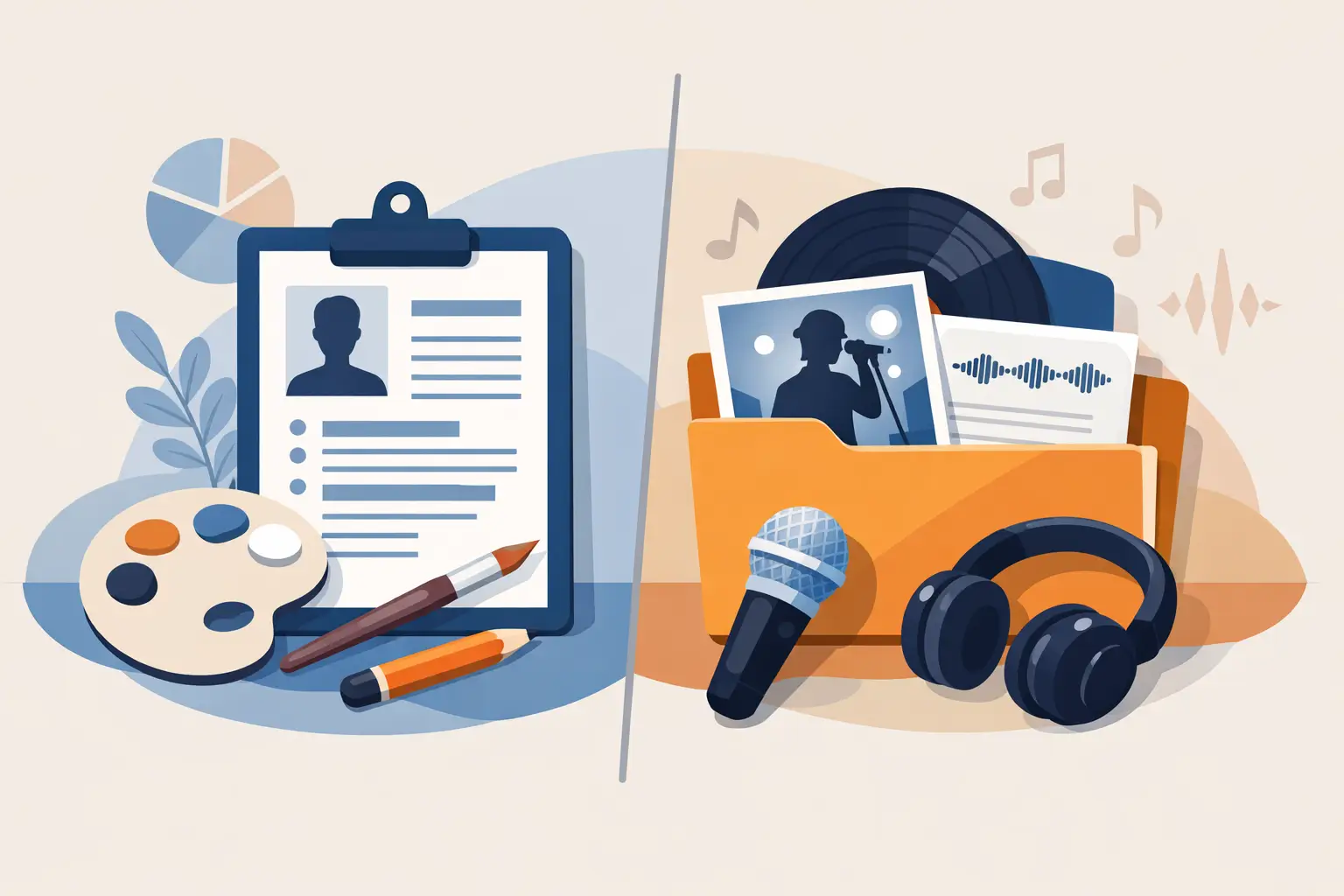
A promoter has asked for your details before tonight’s gig. A bandleader wants to know what you play, who you have worked with and whether you can learn a 20-song set. A blogger needs photos, a bio and a link to your latest release. Same artist, three different asks.
That is where the artist CV vs music press kit question matters. They are related, and both help you look prepared, but they do different jobs. Send the wrong one and you may still get a reply. Send the right one and you make it much easier for people to book you, collaborate with you or tell your story.
Artist CV vs Music Press Kit: the real difference
An artist CV is about your professional musical identity. It shows what you do, what you can contribute and the experience behind it. Think skills, roles, credits, training, performance history, genres, equipment where relevant, and recommendations. It answers a practical question: can this person do the job or fit this project?
A music press kit, often called an EPK, is about promotion. It gives media, promoters and industry contacts the materials they need to present you to an audience. It answers a different question: how do we introduce and market this artist?
The distinction is simple, but useful. A CV proves capability. A press kit supports publicity. One is built for decision-makers assessing you as a musician or creative. The other is built for people who need to announce, pitch or cover your work.
Neither needs to be stiff or overproduced. Local music scenes move quickly. The goal is not to create a corporate document that nobody reads. It is to make the next step obvious for whoever has found you.
What belongs in an artist CV
Your artist CV should be tailored to the kind of opportunities you want. A bassist looking for function-band work will prioritise repertoire, live experience, reading ability and reliability. A singer-songwriter seeking support slots may foreground original releases, notable shows and artistic direction. A producer may lead with genres, software, selected credits and a short showreel.
Start with the essentials: your artist or professional name, location, primary roles and a short statement of what you are working towards. Then give people evidence. Include relevant performance highlights, recording credits, collaborations, residencies, education or training, and particular skills such as harmony vocals, sight-reading, MD work, improvisation or live looping.
Keep it selective. Ten strong, relevant credits beat a long list of every school showcase and unpaid favour from six years ago. If you are early in your career, do not apologise for having fewer credits. Frame the experience you do have clearly: regular open mic performances, a dependable jam-session presence, original material in development, or experience leading rehearsals all count.
Recommendations can make a CV far more useful in local scenes, where word of mouth carries real weight. A brief note from a bandleader, venue host or fellow musician can give context that a list of dates cannot. It says you turn up prepared, listen well, bring the right energy and make the room better.
A digital artist CV such as a Groovecard™ can be particularly practical because it gives collaborators and bookers one current place to see your skills, experience, showreel and community recommendations. That matters when opportunities begin with a quick message after a jam rather than a formal application process.
What belongs in a music press kit
A press kit is less about documenting every capability and more about presenting a clear, compelling artist story. It should be easy for a promoter to pull a quote from, easy for a publication to understand, and easy for a festival team to share internally.
Your EPK usually needs a concise artist bio, high-quality press photos, links to key music or video, selected press quotes if you have them, notable achievements, contact details and social figures only where they genuinely add value. If you have an upcoming release, tour or show, include a focused angle and the relevant dates.
The bio deserves attention. Avoid a string of vague claims about “genre-defying sounds” or being “one to watch”. Say what you make, where you are based, what has happened recently and what gives this project its character. A good bio is specific enough to be memorable and short enough to use.
Your images should match the level of opportunity you are pursuing. You do not need a huge budget, but you do need sharp, current photos that look intentional. Give organisers a horizontal option for event banners and a portrait option for posts or listings. Label files clearly, so nobody is searching through folders called FINAL_final_2.
When to send a CV and when to send a press kit
Send your artist CV when someone is assessing your suitability. This could be a band audition, dep opportunity, pit or session work, a teaching role, a collaboration request, or a booking where the organiser needs confidence that you can deliver a particular set. A CV is also useful when introducing yourself to musicians whose work you admire. It helps them see where you fit without asking them to decode your Instagram feed.
Send a press kit when the priority is public-facing promotion. That includes release pitches, festival applications, media outreach, venue marketing, radio submissions and announcements. If a promoter has already booked you and needs assets for the poster, your EPK is the useful tool.
Sometimes you need both. A showcase application may ask for a biography and press shots, but the programmer may also want live credentials. In that case, lead with the press kit and provide a short CV or profile that supports the booking decision. Do not make people hunt through a 12-page PDF to find one song link and a recent photo.
Build both without doubling your workload
The good news is that the raw material overlaps. Your core biography, strongest live clips, professional photos, key credits and contact details can live in one organised folder. From there, you shape the information for the job in front of you.
Your CV should be concise and scannable. Put the most relevant experience near the top, especially when responding to a specific opportunity. Your press kit can be more visual and story-led, but it still needs to be easy to navigate. One strong page is often more effective than a sprawling document full of outdated links.
Review both every few months, or immediately after a meaningful milestone: a new release, a notable support slot, a residency, a great review or a change in your musical direction. Remove what no longer represents you. A current, modest profile builds more trust than an inflated one full of old claims.
Common mistakes that cost opportunities
The biggest mistake is treating a press kit as a CV. A beautiful set of photos and a streaming link do not tell a musical director whether you can cover keys, sing harmonies or travel for rehearsals. The reverse is also true: a detailed list of gear and qualifications does not give a music writer a usable story about your new EP.
Another common issue is sending too much. People booking local events are busy. Give them enough to make a confident decision, then make it simple to ask for more. Check every link, use an email address you monitor, and make sure your live clips show what you sound like now.
Finally, do not wait for a major career moment to get organised. Your next collaborator may meet you at a Tuesday-night jam, hear one great song and look you up before breakfast. Make sure they can quickly understand what you do and where you are heading. That small piece of preparation can turn a good conversation into the next gig.